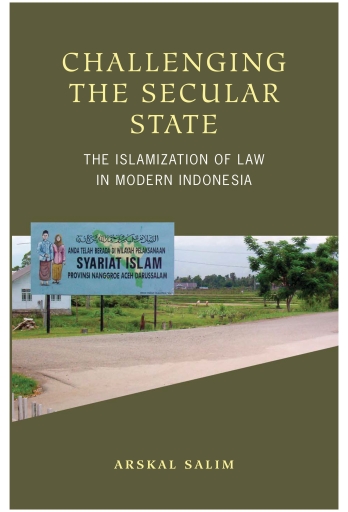
Challenging the Secular State
Von Salim, Arskal
Herausgegeben von University of Hawaii Press
English
273 Seiten
2008
ISBN 9780824861797
PDF
Buy at Catademic
🇺🇸
 Catademic
🇺🇸
Shop besuchen →
Catademic
🇺🇸
Shop besuchen →
 Bajalibros Latam
🇺🇸
Shop besuchen →
Bajalibros Latam
🇺🇸
Shop besuchen →
 Association of University Presses - Tienda FILUNI
🇺🇸
Shop besuchen →
Association of University Presses - Tienda FILUNI
🇺🇸
Shop besuchen →
 Ebooks Librería Antártica
🇨🇱
Shop besuchen →
Ebooks Librería Antártica
🇨🇱
Shop besuchen →
 Ebooks Agustin
🇪🇸
Shop besuchen →
Ebooks Agustin
🇪🇸
Shop besuchen →
 Bajalibros Argentina
🇦🇷
Shop besuchen →
Bajalibros Argentina
🇦🇷
Shop besuchen →
 Sanborns Ebooks
🇲🇽
Shop besuchen →
Sanborns Ebooks
🇲🇽
Shop besuchen →
 ebooks Libreria del GAM
🇨🇱
Shop besuchen →
ebooks Libreria del GAM
🇨🇱
Shop besuchen →
 Bookshop Uruguay
🇺🇾
Shop besuchen →
Bookshop Uruguay
🇺🇾
Shop besuchen →
 ebookskitapenas
🇬🇹
Shop besuchen →
ebookskitapenas
🇬🇹
Shop besuchen →
 Ebooks Yenny - El Ateneo
🇦🇷
Shop besuchen →
Ebooks Yenny - El Ateneo
🇦🇷
Shop besuchen →
 Crisol Ebooks
🇵🇪
Shop besuchen →
Crisol Ebooks
🇵🇪
Shop besuchen →
Verfügbar in 12 Buchhandlungen
Catademic
🇺🇸
Shop besuchen →
Bajalibros Latam
🇺🇸
Shop besuchen →
Association of University Presses - Tienda FILUNI
🇺🇸
Shop besuchen →
Ebooks Librería Antártica
🇨🇱
Shop besuchen →
Ebooks Agustin
🇪🇸
Shop besuchen →
Bajalibros Argentina
🇦🇷
Shop besuchen →
Sanborns Ebooks
🇲🇽
Shop besuchen →
ebooks Libreria del GAM
🇨🇱
Shop besuchen →
Bookshop Uruguay
🇺🇾
Shop besuchen →
ebookskitapenas
🇬🇹
Shop besuchen →
Ebooks Yenny - El Ateneo
🇦🇷
Shop besuchen →
Crisol Ebooks
🇵🇪
Shop besuchen →
Über dieses Buch
<p><i>Challenging the Secular State</i> examines Muslim efforts to incorporate <i>shari’a</i> (religious law) into modern Indonesia’s legal system from the time of independence in 1945 to the present. The author argues that attempts to formally implement <i>shari’a</i> in Indonesia, the world’s most populous Muslim state, have always been marked by tensions between the political aspirations of proponents and opponents of <i>shari’a</i> and by resistance from the national government. As a result, although pro-<i>shari’a</i> movements have made significant progress in recent years, <i>shari’a</i> remains tightly confined within Indonesia’s secular legal system.<br><br>The author first places developments in Indonesia within a broad historical and geographic context, offering a provocative analysis of the Ottoman empire’s millet system and thoughtful comparisons of different approaches to pro-<i>shari’a</i> movements in other Muslim countries (Saudi Arabia, Iran, Pakistan). He then describes early aspirations for the formal implementation of <i>shari’a</i> in Indonesia in the context of modern understandings of religious law as conflicting with the idea of the nation-state.<br><br>Later chapters explore the efforts of Islamic parties in Indonesia to include <i>shari’a</i> in national law. Salim offers a detailed analysis of debates over the constitution and possible amendments to it concerning the obligation of Indonesian Muslims to follow Islamic law. A study of the Zakat Law illustrates the complicated relationship between the religious duties of Muslim citizens and the nonreligious character of the modern nation-state. Chapters look at how Islamization has deepened with the enactment of the Zakat Law and demonstrate the incongruities that have emerged from its implementation. The efforts of local Muslims to apply <i>shari’a</i> in particular regions are also discussed. Attempts at the Islamization of laws in Aceh are especially significant because it is the only province in Indonesia that has been allowed to move toward a <i>shari’a</i>-based system. The book concludes with a review of the profound conflicts and tensions found in the motivations behind Islamization.</p>
Kategorien
- Sprache
- English
Teilen