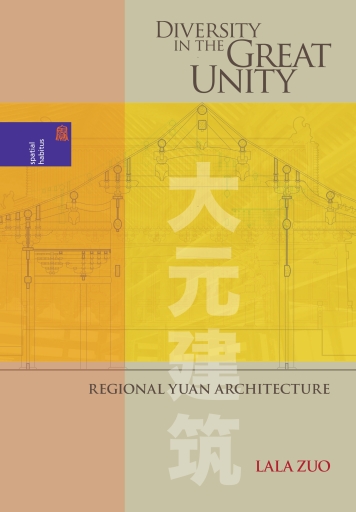
Diversity in the Great Unity
Von Zuo, Lala
Herausgegeben von University of Hawaii Press
English
2019
ISBN 9780824879846
eBook
Buy at Catademic
🇺🇸
 Catademic
🇺🇸
Shop besuchen →
Catademic
🇺🇸
Shop besuchen →
 Bajalibros Latam
🇺🇸
Shop besuchen →
Bajalibros Latam
🇺🇸
Shop besuchen →
 Association of University Presses - Tienda FILUNI
🇺🇸
Shop besuchen →
Association of University Presses - Tienda FILUNI
🇺🇸
Shop besuchen →
 Ebooks Librería Antártica
🇨🇱
Shop besuchen →
Ebooks Librería Antártica
🇨🇱
Shop besuchen →
 Ebooks Agustin
🇪🇸
Shop besuchen →
Ebooks Agustin
🇪🇸
Shop besuchen →
 Bajalibros Argentina
🇦🇷
Shop besuchen →
Bajalibros Argentina
🇦🇷
Shop besuchen →
 Sanborns Ebooks
🇲🇽
Shop besuchen →
Sanborns Ebooks
🇲🇽
Shop besuchen →
 ebooks Libreria del GAM
🇨🇱
Shop besuchen →
ebooks Libreria del GAM
🇨🇱
Shop besuchen →
 Bookshop Uruguay
🇺🇾
Shop besuchen →
Bookshop Uruguay
🇺🇾
Shop besuchen →
 ebookskitapenas
🇬🇹
Shop besuchen →
ebookskitapenas
🇬🇹
Shop besuchen →
 Ebooks Yenny - El Ateneo
🇦🇷
Shop besuchen →
Ebooks Yenny - El Ateneo
🇦🇷
Shop besuchen →
 Crisol Ebooks
🇵🇪
Shop besuchen →
Crisol Ebooks
🇵🇪
Shop besuchen →
Verfügbar in 12 Buchhandlungen
Catademic
🇺🇸
Shop besuchen →
Bajalibros Latam
🇺🇸
Shop besuchen →
Association of University Presses - Tienda FILUNI
🇺🇸
Shop besuchen →
Ebooks Librería Antártica
🇨🇱
Shop besuchen →
Ebooks Agustin
🇪🇸
Shop besuchen →
Bajalibros Argentina
🇦🇷
Shop besuchen →
Sanborns Ebooks
🇲🇽
Shop besuchen →
ebooks Libreria del GAM
🇨🇱
Shop besuchen →
Bookshop Uruguay
🇺🇾
Shop besuchen →
ebookskitapenas
🇬🇹
Shop besuchen →
Ebooks Yenny - El Ateneo
🇦🇷
Shop besuchen →
Crisol Ebooks
🇵🇪
Shop besuchen →
Über dieses Buch
<p>Timber-framed architecture has long been viewed as an embodiment of Chinese civilization, a hierarchic society ruled by Confucian orthodoxy. Throughout its history, Chinese architectural design was closely regulated by court-enforced building codes, which created a highly standardized and modularized system. In <i>Diversity in the Great Unity—</i>the first in-depth English-language work to present regional traditions of Chinese architecture based on a detailed study of the timber construction system—Lala Zuo maintains that during the nearly century-long Yuan dynasty (1271–1368), the tradition of “Han-Chinese” architecture as coded, uniform, and controlled by the central government did not take hold. She presents case studies of twenty buildings along the Yangtze River built during the Yuan, often considered a transitional phase in Chinese architectural history. <br><br>Most of the structures have firm dates, and all are analyzed according to patronage, chronology, and function. Their representativeness is determined by their broad geographic distribution as well as by their scarcity. Numerous photographs and line-drawings accompany the analyses. Referencing Yuan architecture in north China along the Yellow River, Zuo outlines its characteristics in three regions and connects the regional traditions to periods before and after the Yuan, allowing her to contextualize architecture in Yuan social and political history. She explains how the division of regional traditions, especially those in the south, contributed to the transformation of dynastic styles from the Song (960–1279) to the Ming (1368–1644) and how the Song-Yuan migration may have affected architectural design.<br><br>An appendix presents an extensive glossary of Chinese architectural terms in Song terminology to enable a better understanding of the subject. Although the primary focus of this book is the technical evolution of surviving Yuan architecture, its interdisciplinary approach goes beyond architecture by offering a re-evaluation of Chinese society in light of cultural and religious diversity under Mongol rule.</p>
- Sprache
- English
Teilen
Das könnte dir auch gefallen

María Antonieta
Zamorano, Mª Luisa

El libro de los ingenios: colección de vistas de los principales ingenios de la isla de Cuba
Cantero, Justo Germán
Santiago en 1850: James Melville Gilliss, un astrónomo norteamericano en Chile.: James Melville Gilliss, un astrónomo norteamericano en Chile.
Germán Hidalgo Hermosilla, 0
Geomantische Tempelwelten
Burrows, Francis

Zur Sache des Buches
Hagner, Michael