
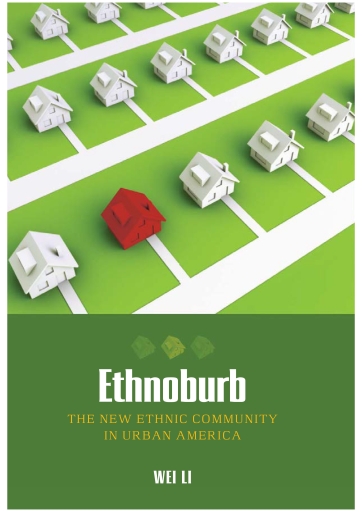
Ethnoburb
Von Li, Wei
Herausgegeben von University of Hawaii Press
English
233 Seiten
2008
ISBN 9780824862411
PDF
Buy at Bajalibros Latam
🇺🇸
 Catademic
🇺🇸
Shop besuchen →
Catademic
🇺🇸
Shop besuchen →
 Bajalibros Latam
🇺🇸
Shop besuchen →
Bajalibros Latam
🇺🇸
Shop besuchen →
 Association of University Presses - Tienda FILUNI
🇺🇸
Shop besuchen →
Association of University Presses - Tienda FILUNI
🇺🇸
Shop besuchen →
 Ebooks Librería Antártica
🇨🇱
Shop besuchen →
Ebooks Librería Antártica
🇨🇱
Shop besuchen →
 Ebooks Agustin
🇪🇸
Shop besuchen →
Ebooks Agustin
🇪🇸
Shop besuchen →
 Bajalibros Argentina
🇦🇷
Shop besuchen →
Bajalibros Argentina
🇦🇷
Shop besuchen →
 Sanborns Ebooks
🇲🇽
Shop besuchen →
Sanborns Ebooks
🇲🇽
Shop besuchen →
 ebooks Libreria del GAM
🇨🇱
Shop besuchen →
ebooks Libreria del GAM
🇨🇱
Shop besuchen →
 Bookshop Uruguay
🇺🇾
Shop besuchen →
Bookshop Uruguay
🇺🇾
Shop besuchen →
 ebookskitapenas
🇬🇹
Shop besuchen →
ebookskitapenas
🇬🇹
Shop besuchen →
 Ebooks Yenny - El Ateneo
🇦🇷
Shop besuchen →
Ebooks Yenny - El Ateneo
🇦🇷
Shop besuchen →
 Crisol Ebooks
🇵🇪
Shop besuchen →
Crisol Ebooks
🇵🇪
Shop besuchen →
Verfügbar in 12 Buchhandlungen
Catademic
🇺🇸
Shop besuchen →
Bajalibros Latam
🇺🇸
Shop besuchen →
Association of University Presses - Tienda FILUNI
🇺🇸
Shop besuchen →
Ebooks Librería Antártica
🇨🇱
Shop besuchen →
Ebooks Agustin
🇪🇸
Shop besuchen →
Bajalibros Argentina
🇦🇷
Shop besuchen →
Sanborns Ebooks
🇲🇽
Shop besuchen →
ebooks Libreria del GAM
🇨🇱
Shop besuchen →
Bookshop Uruguay
🇺🇾
Shop besuchen →
ebookskitapenas
🇬🇹
Shop besuchen →
Ebooks Yenny - El Ateneo
🇦🇷
Shop besuchen →
Crisol Ebooks
🇵🇪
Shop besuchen →
Über dieses Buch
<p><b>Winner of the 2009 Book Award in Social Sciences, Association for Asian American Studies</b><br><br>This innovative work provides a new model for the analysis of ethnic and racial settlement patterns in the United States and Canada. Ethnoburbs—suburban ethnic clusters of residential areas and business districts in large metropolitan areas—are multiracial, multiethnic, multicultural, multilingual, and often multinational communities in which one ethnic minority group has a significant concentration but does not necessarily constitute a majority. Wei Li documents the processes that have evolved with the spatial transformation of the Chinese American community of Los Angeles and that have converted the San Gabriel Valley into ethnoburbs in the latter half of the twentieth century, and she examines the opportunities and challenges that occurred as a result of these changes.<br><br>Traditional ethnic and immigrant settlements customarily take the form of either ghettos or enclaves. Thus the majority of scholarly publications and mass media covering the San Gabriel Valley has described it as a Chinatown located in Los Angeles’ suburbs. Li offers a completely different approach to understanding and analyzing this fascinating place. By conducting interviews with residents, a comparative spatial examination of census data and other statistical sources, and fieldwork—coupled with her own holistic view of the area—Li gives readers an effective and fine-tuned socio-spatial analysis of the evolution of a new type of racially defined place. The San Gabriel Valley tells a unique story, but its evolution also speaks to those experiencing a similar type of ethnic and racial conurbation. In sum, Li sheds light on processes that are shaping other present (and future) ethnically and racially diverse communities.<br><br>The concept of the ethnoburb has redefined the way geographers and other scholars think about ethnic space, place, and process. This book will contribute significantly to both theoretical and empirical studies of immigration by presenting a more intensive and thorough "take" on arguments about spatial and social processes in urban and suburban America.</p>
Kategorien
- Sprache
- English
Teilen
Das könnte dir auch gefallen
Freedom without Justice
Lee, Chol Soo
Swiss in Greater Milwaukee
Wellauer-Lenius, Maralyn A.
História Política De Castanhal
Carujo, Carlos Araujo
Czech Village & New Bohemia
Rasdal, Dave
The Polish Community of Chicopee
Jendrysik, Stephen R.
Locke and the Sacramento Delta Chinatowns
Tom, Lawrence, Tom, Brian, Chinese American Museum of Northern California