
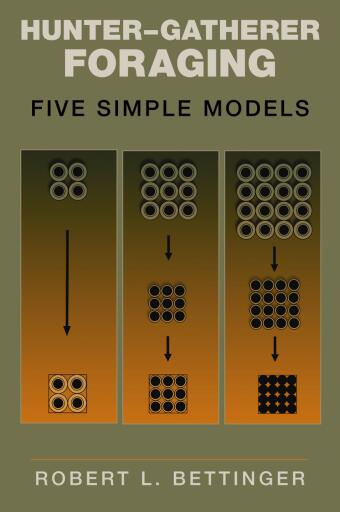
Hunter-Gatherer Foraging
Herausgegeben von Eliot Werner Publications
English
127 Seiten
2009
ISBN 9781733376990
PDF
Buy at Bajalibros Latam
🇺🇸
 Bajalibros Latam
🇺🇸
Shop besuchen →
Bajalibros Latam
🇺🇸
Shop besuchen →
 LORANCHBOOKSTORE
🇺🇸
Shop besuchen →
LORANCHBOOKSTORE
🇺🇸
Shop besuchen →
 Ebooks Librería Carlos Fuentes
🇲🇽
Shop besuchen →
Ebooks Librería Carlos Fuentes
🇲🇽
Shop besuchen →
 ebooks libreria española
🇪🇨
Shop besuchen →
ebooks libreria española
🇪🇨
Shop besuchen →
 Bajalibros Argentina
🇦🇷
Shop besuchen →
Bajalibros Argentina
🇦🇷
Shop besuchen →
 Alpha Books
🇨🇴
Shop besuchen →
Alpha Books
🇨🇴
Shop besuchen →
 Sanborns Ebooks
🇲🇽
Shop besuchen →
Sanborns Ebooks
🇲🇽
Shop besuchen →
 ebooks Libreria del GAM
🇨🇱
Shop besuchen →
ebooks Libreria del GAM
🇨🇱
Shop besuchen →
 Bookshop Uruguay
🇺🇾
Shop besuchen →
Bookshop Uruguay
🇺🇾
Shop besuchen →
 Ebooks Yenny - El Ateneo
🇦🇷
Shop besuchen →
Ebooks Yenny - El Ateneo
🇦🇷
Shop besuchen →
 Crisol Ebooks
🇵🇪
Shop besuchen →
Crisol Ebooks
🇵🇪
Shop besuchen →
Verfügbar in 11 Buchhandlungen
Bajalibros Latam
🇺🇸
Shop besuchen →
LORANCHBOOKSTORE
🇺🇸
Shop besuchen →
Ebooks Librería Carlos Fuentes
🇲🇽
Shop besuchen →
ebooks libreria española
🇪🇨
Shop besuchen →
Bajalibros Argentina
🇦🇷
Shop besuchen →
Alpha Books
🇨🇴
Shop besuchen →
Sanborns Ebooks
🇲🇽
Shop besuchen →
ebooks Libreria del GAM
🇨🇱
Shop besuchen →
Bookshop Uruguay
🇺🇾
Shop besuchen →
Ebooks Yenny - El Ateneo
🇦🇷
Shop besuchen →
Crisol Ebooks
🇵🇪
Shop besuchen →
Über dieses Buch
Within the last three decades, foraging theory has established itself as a major-arguably the dominant-cornerstone for both archaeological and ethnographic hunter-gatherer research. Until now, however, no introductory treatment has presented the subject in a form that was quantitatively explicit and yet easy to follow. Designed as an introduction to undergraduate and graduate students new to the subject, and as a refresher for professionals seeking to broaden their command, Hunter-Gatherer Foraging: Five Simple Models presents the five foraging models that lend themselves best to hunter-gatherer application: diet breadth, linear programming, front- versus back-loaded resources, technological investment, and field processing. Each chapter begins with a hypothetical hunter-gatherer problem and takes the reader through the steps needed to state such problems in quantitative form and solve them. Exercises (with answers) at the end of each chapter reinforce key concepts and methodology. From the reviews . . . "[A] fine volume that does just what it claims to. The style is informal, often humorous, and it will clearly work well in a classroom of advanced undergraduates or graduate students. The flow and clarity of the discussions almost makes one forget that this is math that they're trying to master. . . . [A]nyone with a serious interest in hunter-gatherers, prehistoric subsistence, and resource provisioning will want to own a copy." Mark E. Basgall in Journal of California and Great Basin Anthropology "This book is the first of its kind to provide a suite of tools applicable to many ethnographic and archaeological foraging problems. Anyone . . . involved in human behavioral ecology should work through this book. It is certainly required reading for any student of the discipline, and as it finds its way into the classroom and onto the desks of practitioners, it is sure to become a classic." Brian F. Codding in California Archaeology "[A]n excellent primer on a group of models that . . . played an important role in the development of hunter-gatherer and ecological studies in anthropology . . . . The examples, sample problems, and touch of humor as the mod els are explained make the book ideal for use . . . with either advanced undergraduates, graduate students, or for anyone wishing for a quick reminder of the math behind the models." Susan K. Harris in American Antiquity "[A] laboratory manual to teach mathematical models to people interested in Optimal Foraging Theory. . . . [T]he book will be useful for graduate seminars to teach details of how foraging societies maximize returns in manipulating the variability in resources of their exploitation territories." Andrew B. Smith in Journal of Human Evolution "[T]his . . . small book . . . could be used well as an adjunct or ancillary text for a n umber of different courses in quantitative methods, hunter-gatherers, or foraging economy. . . . [I]t succeeds overall very well and very nicely in what it aims to do." Robert Whallon in Journal of Anthropological Research "This book would make an excellent accompaniment to many anthropology and archaeology courses, both at high school and college levels. . . . There is a lot of well-written material crammed into this little book! I highly recommend it for anyone interested not only directly with hunter-gatherer research, but for anyone who wonders how-we-know what we think we know about ancient day-to-day life." Ira R. Wishoff in The Dirt Brothers (http://dirtbrothers.org/) Prepublication praise . . . "This volume presents exercises designed to convey foraging models in a hands-on manner. An excellent resource for upper-division undergraduate and graduate-level classes focused on topics ranging from analytical models in anthropology/archaeology to hunter-gatherers." Gary M. Feinman, The Field Museum "Anyone who has tried to teach students the various models used in behavioral ecology will find this book a welcome relief.
Kategorien
- Sprache
- English
Teilen
Das könnte dir auch gefallen

Algunas consideraciones didácticas de la educación superior
Peña Fernández, Juan Miguel, Chávez Rosero, Jairo Ricardo, Pérez Bravo, Digna Dionisia

Uma Formidável Multidão: A Política Indígena e a Autonomia Mbayá-Guaicuru na Construção da Fronteira no Alto Paraguai (Final do Século XVIII)
Marinato, Francieli Aparecida
Iowa Wesleyan University
Meyer, Jeffrey S.

Im Chat war er noch so süß – die Fortsetzung!
Weber, Annette

Acessibilize-se: Pesquisa, Inclusão, Formação, Legislação, Políticas Públicas
Junior, Francisco Varder Braga
Ensuring Success for Students Who Transfer
Maietta, Heather N.