
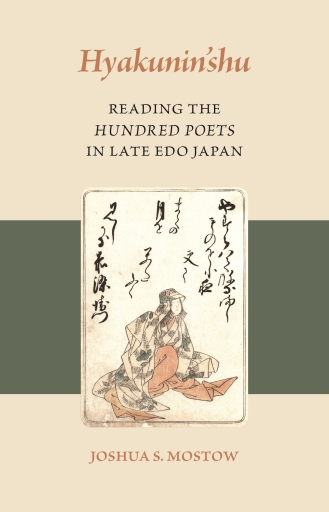
Hyakunin’shu
Herausgegeben von University of Hawaii Press
English
2024
ISBN 9780824897802
eBook
Buy at Catademic
🇺🇸
 Catademic
🇺🇸
Shop besuchen →
Catademic
🇺🇸
Shop besuchen →
 Bajalibros Latam
🇺🇸
Shop besuchen →
Bajalibros Latam
🇺🇸
Shop besuchen →
 Association of University Presses - Tienda FILUNI
🇺🇸
Shop besuchen →
Association of University Presses - Tienda FILUNI
🇺🇸
Shop besuchen →
 Ebooks Librería Antártica
🇨🇱
Shop besuchen →
Ebooks Librería Antártica
🇨🇱
Shop besuchen →
 Ebooks Agustin
🇪🇸
Shop besuchen →
Ebooks Agustin
🇪🇸
Shop besuchen →
 Bajalibros Argentina
🇦🇷
Shop besuchen →
Bajalibros Argentina
🇦🇷
Shop besuchen →
 Sanborns Ebooks
🇲🇽
Shop besuchen →
Sanborns Ebooks
🇲🇽
Shop besuchen →
 ebooks Libreria del GAM
🇨🇱
Shop besuchen →
ebooks Libreria del GAM
🇨🇱
Shop besuchen →
 Bookshop Uruguay
🇺🇾
Shop besuchen →
Bookshop Uruguay
🇺🇾
Shop besuchen →
 ebookskitapenas
🇬🇹
Shop besuchen →
ebookskitapenas
🇬🇹
Shop besuchen →
 Ebooks Yenny - El Ateneo
🇦🇷
Shop besuchen →
Ebooks Yenny - El Ateneo
🇦🇷
Shop besuchen →
 Crisol Ebooks
🇵🇪
Shop besuchen →
Crisol Ebooks
🇵🇪
Shop besuchen →
Verfügbar in 12 Buchhandlungen
Catademic
🇺🇸
Shop besuchen →
Bajalibros Latam
🇺🇸
Shop besuchen →
Association of University Presses - Tienda FILUNI
🇺🇸
Shop besuchen →
Ebooks Librería Antártica
🇨🇱
Shop besuchen →
Ebooks Agustin
🇪🇸
Shop besuchen →
Bajalibros Argentina
🇦🇷
Shop besuchen →
Sanborns Ebooks
🇲🇽
Shop besuchen →
ebooks Libreria del GAM
🇨🇱
Shop besuchen →
Bookshop Uruguay
🇺🇾
Shop besuchen →
ebookskitapenas
🇬🇹
Shop besuchen →
Ebooks Yenny - El Ateneo
🇦🇷
Shop besuchen →
Crisol Ebooks
🇵🇪
Shop besuchen →
Über dieses Buch
<p><i>Hyakunin’shu: Reading the </i>Hundred Poets<i> in Late Edo Japan</i> explores the “popular literary literacy” of the Japanese at the edge of modernity. By reproducing and translating a well-known annotated and illustrated Ansei-era (1854–1859) edition of the <i>Hyakunin isshu</i>—for hundreds of years the most basic and best-known <i>waka</i> primer in the entire Japanese literary canon—Joshua Mostow reveals how commoners of the time made sense of the collection. Thanks to the popularization of the poems in the early modern period and the advent of commercial publishing, the <i>Hyakunin’shu </i>(as it was commonly called) was no longer the exclusive intellectual property of the upper classes but part of a poetic heritage shared by all literate Japanese. <br><br>Mostow traces the <i>Hyakunin’shu’</i>s history from the first published collections in the early sixteenth century and printed commentaries of formerly esoteric and secret exegesis to later editions that include imagined portraits of the poets and, ultimately, pictures of the “heart”—pictorializations of the meaning of the poems themselves. His study illuminates the importance of “variant <i>One Hundred Poets</i>,” such as the <i>Warrior One Hundred Poets</i>, in popularizing the collection and the work’s strong association with feminine education from the early eighteenth century onward. The National Learning (Kokugaku) movement pursued a philological analysis of the poems, leading to translations of the <i>Hyakunin’shu</i> into contemporary, vernacular, spoken Japanese. The poems eventually served as the basis of a card game that became a staple of New Year festivities. <br><br>This volume presents some innovations in translating premodern Japanese poetry: in the Introduction, Mostow considers the <i>Hyakunin’shu’</i>s reception during the Edo, when male homoerotic relationships were taken for granted, and makes the case for his translating the love poems in a non-heteronormative way. In addition, the translated poems are lineated to give readers a sense of the original edition’s <i>chirashi-gaki</i>, or “scattered writing,” allowing them to see how each poem’s sematic elements are distributed on the page.</p>
- Sprache
- English
Teilen
Das könnte dir auch gefallen

The War in the East: Japan, China, and Corea
White, Trumbull

One Hundred Mountains of Japan
Fukada, Kyūya
Reorienting the Pure Land
Masatsugu, Michael Kenji

Making Our Own Destiny
Nakano, Lynne Y.
Sacred Texts and Buried Treasures
Farris, William Wayne
Precepts, Ordinations, and Practice in Medieval Japanese Tendai
Groner, Paul