
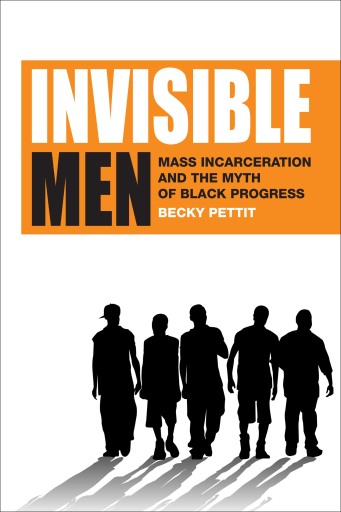
Invisible Men
Von Pettit, Becky
Herausgegeben von Russell Sage Foundation
English
2012
ISBN 9781610447782
eBook
Buy at Bajalibros Latam
🇺🇸
 Catademic
🇺🇸
Shop besuchen →
Catademic
🇺🇸
Shop besuchen →
 Bajalibros Latam
🇺🇸
Shop besuchen →
Bajalibros Latam
🇺🇸
Shop besuchen →
 Association of University Presses - Tienda FILUNI
🇺🇸
Shop besuchen →
Association of University Presses - Tienda FILUNI
🇺🇸
Shop besuchen →
 Ebooks Librería Antártica
🇨🇱
Shop besuchen →
Ebooks Librería Antártica
🇨🇱
Shop besuchen →
 Ebooks Agustin
🇪🇸
Shop besuchen →
Ebooks Agustin
🇪🇸
Shop besuchen →
 Bajalibros Argentina
🇦🇷
Shop besuchen →
Bajalibros Argentina
🇦🇷
Shop besuchen →
 Sanborns Ebooks
🇲🇽
Shop besuchen →
Sanborns Ebooks
🇲🇽
Shop besuchen →
 ebooks Libreria del GAM
🇨🇱
Shop besuchen →
ebooks Libreria del GAM
🇨🇱
Shop besuchen →
 Bookshop Uruguay
🇺🇾
Shop besuchen →
Bookshop Uruguay
🇺🇾
Shop besuchen →
 ebookskitapenas
🇬🇹
Shop besuchen →
ebookskitapenas
🇬🇹
Shop besuchen →
 Ebooks Yenny - El Ateneo
🇦🇷
Shop besuchen →
Ebooks Yenny - El Ateneo
🇦🇷
Shop besuchen →
 Crisol Ebooks
🇵🇪
Shop besuchen →
Crisol Ebooks
🇵🇪
Shop besuchen →
Verfügbar in 12 Buchhandlungen
Catademic
🇺🇸
Shop besuchen →
Bajalibros Latam
🇺🇸
Shop besuchen →
Association of University Presses - Tienda FILUNI
🇺🇸
Shop besuchen →
Ebooks Librería Antártica
🇨🇱
Shop besuchen →
Ebooks Agustin
🇪🇸
Shop besuchen →
Bajalibros Argentina
🇦🇷
Shop besuchen →
Sanborns Ebooks
🇲🇽
Shop besuchen →
ebooks Libreria del GAM
🇨🇱
Shop besuchen →
Bookshop Uruguay
🇺🇾
Shop besuchen →
ebookskitapenas
🇬🇹
Shop besuchen →
Ebooks Yenny - El Ateneo
🇦🇷
Shop besuchen →
Crisol Ebooks
🇵🇪
Shop besuchen →
Über dieses Buch
<div>For African American men without a high school diploma, being in prison or jail is more common than being employed—a sobering reality that calls into question post-Civil Rights era social gains. Nearly 70 percent of young black men will be imprisoned at some point in their lives, and poor black men with low levels of education make up a disproportionate share of incarcerated Americans. In Invisible Men, sociologist Becky Pettit demonstrates another vexing fact of mass incarceration: most national surveys do not account for prison inmates, a fact that results in a misrepresentation of U.S. political, economic, and social conditions in general and black progress in particular. Invisible Men provides an eye-opening examination of how mass incarceration has concealed decades of racial inequality. Pettit marshals a wealth of evidence correlating the explosion in prison growth with the disappearance of millions of black men into the American penal system. She shows that, because prison inmates are not included in most survey data, statistics that seemed to indicate a narrowing black-white racial gap—on educational attainment, work force participation, and earnings—instead fail to capture persistent racial, economic, and social disadvantage among African Americans. Federal statistical agencies, including the U.S. Census Bureau, collect surprisingly little information about the incarcerated, and inmates are not included in household samples in national surveys. As a result, these men are invisible to most mainstream social institutions, lawmakers, and nearly all social science research that isn't directly related to crime or criminal justice. Since merely being counted poses such a challenge, inmates' lives—including their family background, the communities they come from, or what happens to them after incarceration—are even more rarely examined. And since correctional budgets provide primarily for housing and monitoring inmates, with little left over for job training or rehabilitation, a large population of young men are not only invisible to society while in prison but also ill-equipped to participate upon release. Invisible Men provides a vital reality check for social researchers, lawmakers, and anyone who cares about racial equality. The book shows that more than a half century after the first civil rights legislation, the dismal fact of mass incarceration inflicts widespread and enduring damage by undermining the fair allocation of public resources and political representation, by depriving the children of inmates of their parents' economic and emotional participation, and, ultimately, by concealing African American disadvantage from public view.</div>
- Sprache
- English
Teilen
Das könnte dir auch gefallen

Mitos de Chile
Sonia Montecino Aguirre

Ciencias Sociales 5 EGB

Impressões de Um Corpo Conectado: Como a Publicidade está nos Incitando à Conexão Digital
Mozzini-Alister, Camila

As Malhas do Poder: A Reconfiguração da Noção de Poder na Filosofia de Michel Foucault
Barros, Igor Corrêa de

A ação coletiva e seus sentidos
Torres, Ewerton

Los narcos gringos
Esquivel, J. Jesús