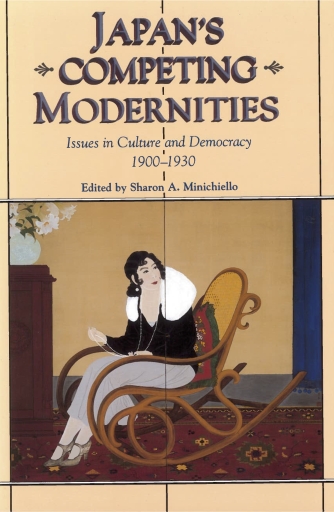
Japan's Competing Modernities
Herausgegeben von University of Hawaii Press
English
409 Seiten
1998
ISBN 9780824863159
PDF
Buy at Catademic
🇺🇸
 Catademic
🇺🇸
Shop besuchen →
Catademic
🇺🇸
Shop besuchen →
 Bajalibros Latam
🇺🇸
Shop besuchen →
Bajalibros Latam
🇺🇸
Shop besuchen →
 Association of University Presses - Tienda FILUNI
🇺🇸
Shop besuchen →
Association of University Presses - Tienda FILUNI
🇺🇸
Shop besuchen →
 Ebooks Librería Antártica
🇨🇱
Shop besuchen →
Ebooks Librería Antártica
🇨🇱
Shop besuchen →
 Ebooks Agustin
🇪🇸
Shop besuchen →
Ebooks Agustin
🇪🇸
Shop besuchen →
 Bajalibros Argentina
🇦🇷
Shop besuchen →
Bajalibros Argentina
🇦🇷
Shop besuchen →
 Sanborns Ebooks
🇲🇽
Shop besuchen →
Sanborns Ebooks
🇲🇽
Shop besuchen →
 ebooks Libreria del GAM
🇨🇱
Shop besuchen →
ebooks Libreria del GAM
🇨🇱
Shop besuchen →
 Bookshop Uruguay
🇺🇾
Shop besuchen →
Bookshop Uruguay
🇺🇾
Shop besuchen →
 ebookskitapenas
🇬🇹
Shop besuchen →
ebookskitapenas
🇬🇹
Shop besuchen →
 Ebooks Yenny - El Ateneo
🇦🇷
Shop besuchen →
Ebooks Yenny - El Ateneo
🇦🇷
Shop besuchen →
 Crisol Ebooks
🇵🇪
Shop besuchen →
Crisol Ebooks
🇵🇪
Shop besuchen →
Verfügbar in 12 Buchhandlungen
Catademic
🇺🇸
Shop besuchen →
Bajalibros Latam
🇺🇸
Shop besuchen →
Association of University Presses - Tienda FILUNI
🇺🇸
Shop besuchen →
Ebooks Librería Antártica
🇨🇱
Shop besuchen →
Ebooks Agustin
🇪🇸
Shop besuchen →
Bajalibros Argentina
🇦🇷
Shop besuchen →
Sanborns Ebooks
🇲🇽
Shop besuchen →
ebooks Libreria del GAM
🇨🇱
Shop besuchen →
Bookshop Uruguay
🇺🇾
Shop besuchen →
ebookskitapenas
🇬🇹
Shop besuchen →
Ebooks Yenny - El Ateneo
🇦🇷
Shop besuchen →
Crisol Ebooks
🇵🇪
Shop besuchen →
Über dieses Buch
<p>Scholars, Japanese and non-Japanese alike, have studied the greater Taisho era (1900-1930) within the framework of Taisho <i>demokurashii</i> (democracy). While this concept has proved useful, students of the period in more recent years have sought alternative ways of understanding the late Meiji-Taisho period. This collection of essays, each based on new research, offers original insights into various aspects of modern Japanese cultural history from "modernist" architecture to women as cultural symbols, popular songs to the rhetoric of empire-building, and more. The volume is organized around three general topics: geographical and cultural space; cosmopolitanism and national identity; and diversity, autonomy, and integration. Within these the authors have identified a number of thematic tensions that link the essays: high and low culture in cultural production and dissemination; national and ethnic identities; empire and ethnicity; the center and the periphery; <i>naichi</i> (homeland) and <i>gaichi</i> (overseas); urban and rural; public and private; migration and barriers. <br><br> The volume opens up new avenues of exploration for the study of modern Japanese history and culture. If, as one of the authors contends, the imperative is " to understand more fully the historical forces that made Japan what it is today," these studies of Japan's "competing modernities" point the way to answers to some of the country's most challenging historical questions in this century. <br><br> Contributors: Gail L. Bernstein, Barbara Brooks, Lonny E. Carlile, Kevin M. Doak, Joshua A. Fogel, Sheldon Garon, Elaine Gerbert, Jeffrey E. Hanes, Helen Hardacre, Sharon A. Minichiello, Tessa Morris-Suzuki, Jonathan M. Reynolds, Michael Robinson, Roy Starrs, Mariko Asano Tamanoi, Julia Adeney Thomas, E. Patricia Tsurumi, Christine R. Yano.</p>
Kategorien
- Sprache
- English
Teilen