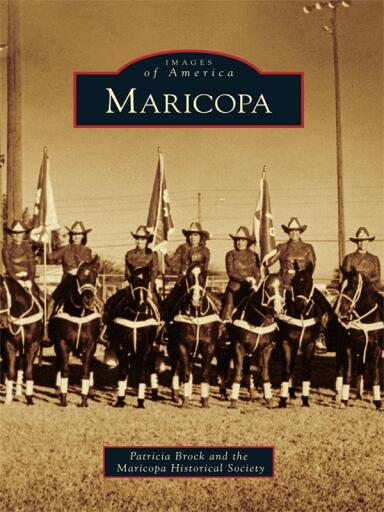
Maricopa
Von Brock, Patricia, Maricopa Historical Society
Herausgegeben von Arcadia Publishing
English
2011
ISBN 9781439639993
eBook







Über dieses Buch
The Hohokam built an extensive network of canals with sticks and stone hoes, but mysteriously disappeared in 1450. Later, the Pima and Maricopa Indians occupied their farmlands near the Gila River, and Maricopa took on the name of the latter. In 1858, Maricopa became an isolated little town in the middle of the desert. It served as the major stage station for the Butterfield Overland Stage Station and became a beacon of light for trappers, traders, and immigrants brave enough to travel its unknown land. Maricopa moved south in 1879 to latch onto the newly built Southern Pacific Railroad and became Arizona�s freighting distribution center. A second move took it 4 miles east to better align with Tempe. Thus began Maricopa�s life as an important railroad junction, playing host to two presidents, 1911 flying machines, honeymoon couples, actors, and a nest of wildcats to entertain the hundreds of passengers who waited for their connections to Phoenix or east-west. In the early 2000s, Maricopa grew from a small farming community to a city, earning it the title of one of the fastest growing cities in the nation. Today its population continues to grow with more than 40,000 inhabitants from all over the United States and world.
- Sprache
- English
Teilen