
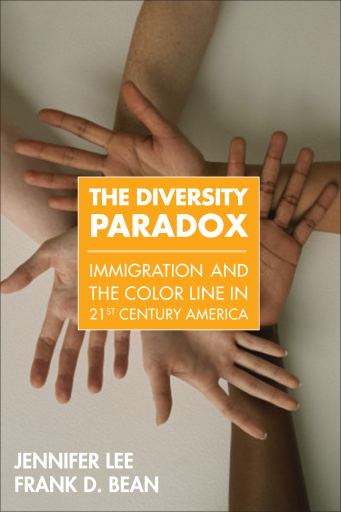
The Diversity Paradox
Von Bean, Frank D., Lee, Jennifer
Herausgegeben von Russell Sage Foundation
English
2010
ISBN 9781610446617
eBook
Buy at Catademic
🇺🇸
 Catademic
🇺🇸
Shop besuchen →
Catademic
🇺🇸
Shop besuchen →
 Bajalibros Latam
🇺🇸
Shop besuchen →
Bajalibros Latam
🇺🇸
Shop besuchen →
 Association of University Presses - Tienda FILUNI
🇺🇸
Shop besuchen →
Association of University Presses - Tienda FILUNI
🇺🇸
Shop besuchen →
 Ebooks Librería Antártica
🇨🇱
Shop besuchen →
Ebooks Librería Antártica
🇨🇱
Shop besuchen →
 Ebooks Agustin
🇪🇸
Shop besuchen →
Ebooks Agustin
🇪🇸
Shop besuchen →
 Bajalibros Argentina
🇦🇷
Shop besuchen →
Bajalibros Argentina
🇦🇷
Shop besuchen →
 Sanborns Ebooks
🇲🇽
Shop besuchen →
Sanborns Ebooks
🇲🇽
Shop besuchen →
 ebooks Libreria del GAM
🇨🇱
Shop besuchen →
ebooks Libreria del GAM
🇨🇱
Shop besuchen →
 Bookshop Uruguay
🇺🇾
Shop besuchen →
Bookshop Uruguay
🇺🇾
Shop besuchen →
 ebookskitapenas
🇬🇹
Shop besuchen →
ebookskitapenas
🇬🇹
Shop besuchen →
 Ebooks Yenny - El Ateneo
🇦🇷
Shop besuchen →
Ebooks Yenny - El Ateneo
🇦🇷
Shop besuchen →
 Crisol Ebooks
🇵🇪
Shop besuchen →
Crisol Ebooks
🇵🇪
Shop besuchen →
Verfügbar in 12 Buchhandlungen
Catademic
🇺🇸
Shop besuchen →
Bajalibros Latam
🇺🇸
Shop besuchen →
Association of University Presses - Tienda FILUNI
🇺🇸
Shop besuchen →
Ebooks Librería Antártica
🇨🇱
Shop besuchen →
Ebooks Agustin
🇪🇸
Shop besuchen →
Bajalibros Argentina
🇦🇷
Shop besuchen →
Sanborns Ebooks
🇲🇽
Shop besuchen →
ebooks Libreria del GAM
🇨🇱
Shop besuchen →
Bookshop Uruguay
🇺🇾
Shop besuchen →
ebookskitapenas
🇬🇹
Shop besuchen →
Ebooks Yenny - El Ateneo
🇦🇷
Shop besuchen →
Crisol Ebooks
🇵🇪
Shop besuchen →
Über dieses Buch
<div>African Americans grappled with Jim Crow segregation until it was legally overturned in the 1960s. In subsequent decades, the country witnessed a new wave of immigration from Asia and Latin America—forever changing the face of American society and making it more racially diverse than ever before. In The Diversity Paradox, authors Jennifer Lee and Frank Bean take these two poles of American collective identity—the legacy of slavery and immigration—and ask if today's immigrants are destined to become racialized minorities akin to African Americans or if their incorporation into U.S. society will more closely resemble that of their European predecessors. They also tackle the vexing question of whether America's new racial diversity is helping to erode the tenacious black/white color line. The Diversity Paradox uses population-based analyses and in-depth interviews to examine patterns of intermarriage and multiracial identification among Asians, Latinos, and African Americans. Lee and Bean analyze where the color line—and the economic and social advantage it demarcates—is drawn today and on what side these new arrivals fall. They show that Asians and Latinos with mixed ancestry are not constrained by strict racial categories. Racial status often shifts according to situation. Individuals can choose to identify along ethnic lines or as white, and their decisions are rarely questioned by outsiders or institutions. These groups also intermarry at higher rates, which is viewed as part of the process of becoming "American" and a form of upward social mobility. African Americans, in contrast, intermarry at significantly lower rates than Asians and Latinos. Further, multiracial blacks often choose not to identify as such and are typically perceived as being black only—underscoring the stigma attached to being African American and the entrenchment of the "one-drop" rule. Asians and Latinos are successfully disengaging their national origins from the concept of race—like European immigrants before them—and these patterns are most evident in racially diverse parts of the country. For the first time in 2000, the U.S. Census enabled multiracial Americans to identify themselves as belonging to more than one race. Eight years later, multiracial Barack Obama was elected as the 44th President of the United States. For many, these events give credibility to the claim that the death knell has been sounded for institutionalized racial exclusion. The Diversity Paradox is an extensive and eloquent examination of how contemporary immigration and the country's new diversity are redefining the boundaries of race. The book also lays bare the powerful reality that as the old black/white color line fades a new one may well be emerging—with many African Americans still on the other side.</div>
- Sprache
- English
Teilen
Das könnte dir auch gefallen

Ciencias Sociales 4 EGB

Sociologia e Antropologia
Mauss, Marcel

Narcojet
Soto, Martha

El guardián del fuego
Restrepo, Javier Darío

Modernización y enfrentamientos armados en la Colombia del siglo XX
Pécaut, Daniel

Perspectiva de los Tratados Bilaterales de Arbitraje en Colombia: viabilidad y desafíos
Castaño Melo, María Camila