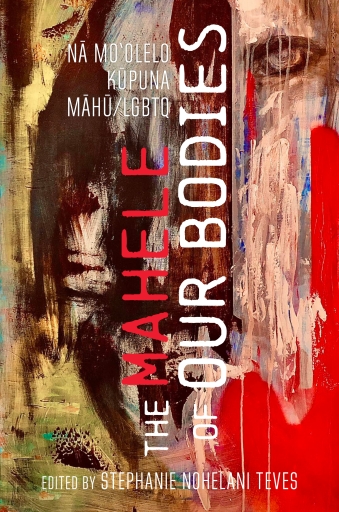
The Mahele of Our Bodies
Herausgegeben von University of Hawaii Press
English
2025
ISBN 9798880700585
eBook
Buy at Bookshop Uruguay
🇺🇾
 Association of University Presses - Tienda FILUNI
🇺🇸
Shop besuchen →
Association of University Presses - Tienda FILUNI
🇺🇸
Shop besuchen →
 Bajalibros Argentina
🇦🇷
Shop besuchen →
Bajalibros Argentina
🇦🇷
Shop besuchen →
 Bajalibros Latam
🇺🇸
Shop besuchen →
Bajalibros Latam
🇺🇸
Shop besuchen →
 Catademic
🇺🇸
Shop besuchen →
Catademic
🇺🇸
Shop besuchen →
Verfügbar in 13 Buchhandlungen
Association of University Presses - Tienda FILUNI
🇺🇸
Shop besuchen →
Bajalibros Argentina
🇦🇷
Shop besuchen →
Bajalibros Latam
🇺🇸
Shop besuchen →
 Catademic
🇺🇸
Shop besuchen →
Catademic
🇺🇸
Shop besuchen →








Über dieses Buch
“They put up barriers, the same way with our bodies. Our bodies are meant for us to be very expressive. Hawaiians were like that. . . . To me it was an expression of the mahele of our bodies, the restriction of our bodies, the control of our expression of our bodies.”
—Kuʻumeaaloha Gomes
Generated from the life histories of ten Kānaka Maoli (Native Hawaiian) elders (kūpuna) who are lesbian, gay, bisexual, transgender, queer, or māhū (LGBTQM), this book reveals the way they experienced overlapping Native/Indigenous and LGBTQM identities. The Mahele of Our Bodies: Nā Moʻolelo Kūpuna Māhū/LGBTQ is filled with rich descriptions of Hawaiʻi’s unwritten queer history, from growing up in the late Territory era and Hawai‘i’s transition to a state, to vivid descriptions of Honolulu nightlife in the 1960s and 1970s, the impact of HIV/AIDS in the hula community, and first-person accounts of the activism and political debates surrounding same-sex marriage rights in the 1990s.
Each life history explores themes of the significance of Hawaiian culture in identity formation, the ongoing prevalence of colonialism and Christianity, the importance of community activism, the role of culture and performance, and the complexities of leaving home to fully come out. The kūpuna in this book have much to teach us about how they survived. Stephanie Nohelani Teves edited the interviews she conducted into first person moʻolelo or stories. Their vivid descriptions of what life was like for them during the Hawaiian renaissance or at the height of the fight for same-sex marriage serve as a reminder of how much emotional and physical labor was expended so that present-day Kānaka LGBTQM can imagine different possibilities and hopeful futures.
One of the only studies of Native/Indigenous queer oral histories, this book also features a robust Introduction that explores community and nation building, culture and tradition, and how all are navigated within the context of Hawaiian sovereignty and LGBTQM civil rights.
Nā Kūpuna:
· Kuʻumeaaloha Gomes
· Noenoe Silva
· Nawahine Dudoit
· Hōkūokalani Akiu
· Kimo Alama Keaulana
· Aunty Kim Haʻupu
· Manulani Aluli Meyer
· Bradford Lum
· Lani Kaʻahumanu
· Keoni Kaʻapuni
Verfügbarkeit
The Mahele of Our Bodies ist als eBook in 13 Online-Buchhandlungen erhältlich. Zu den Buchhandlungen, die es führen, gehören Association of University Presses - Tienda FILUNI, Bajalibros Argentina, Bajalibros Latam.
- Sprache
- English
Teilen
Häufige Fragen
- In welchen Formaten ist The Mahele of Our Bodies erhältlich?
- The Mahele of Our Bodies ist als eBook in 13 Online-Buchhandlungen erhältlich.
- Wo kann ich The Mahele of Our Bodies kaufen?
- Du kannst The Mahele of Our Bodies bei Association of University Presses - Tienda FILUNI, Bajalibros Argentina, Bajalibros Latam kaufen. Vergleiche alle Optionen in der Liste auf dieser Seite.
Bewertungen und Rezensionen
Noch keine Bewertungen. Sei der Erste, der dieses Buch rezensiert.
Anmelden um dieses Buch zu bewerten und zu rezensieren.