The Rousing Drum
Von Schnell, Scott
Herausgegeben von University of Hawaii Press
English
377 Seiten
1999
ISBN 9780824864996
PDF
Buy at Bajalibros Latam
🇺🇸
Catademic
🇺🇸
Shop besuchen →
UN
University of Hawaiʻi Press
🇺🇸
Shop besuchen →
Bajalibros Latam
🇺🇸
Shop besuchen →
Association of University Presses - Tienda FILUNI
🇺🇸
Shop besuchen →

publica.la marketplace
🇦🇷
Shop besuchen →
Ebooks Librería Antártica
🇨🇱
Shop besuchen →
Ebooks Agustin
🇪🇸
Shop besuchen →
Bajalibros Argentina
🇦🇷
Shop besuchen →
Sanborns Ebooks
🇲🇽
Shop besuchen →
ebooks Libreria del GAM
🇺🇾
Shop besuchen →
Bookshop Uruguay
🇺🇾
Shop besuchen →
ebookskitapenas
🇬🇹
Shop besuchen →
Ebooks Yenny - El Ateneo
🇦🇷
Shop besuchen →
Crisol Ebooks
🇨🇴
Shop besuchen →
Verfügbar in 14 Buchhandlungen
Catademic
🇺🇸
Shop besuchen →
UN
University of Hawaiʻi Press
🇺🇸
Shop besuchen →
Association of University Presses - Tienda FILUNI
🇺🇸
Shop besuchen →

publica.la marketplace
🇦🇷
Shop besuchen →
Ebooks Librería Antártica
🇨🇱
Shop besuchen →
Ebooks Agustin
🇪🇸
Shop besuchen →
Sanborns Ebooks
🇲🇽
Shop besuchen →
ebooks Libreria del GAM
🇺🇾
Shop besuchen →
ebookskitapenas
🇬🇹
Shop besuchen →
Ebooks Yenny - El Ateneo
🇦🇷
Shop besuchen →
Crisol Ebooks
🇨🇴
Shop besuchen →
Über dieses Buch
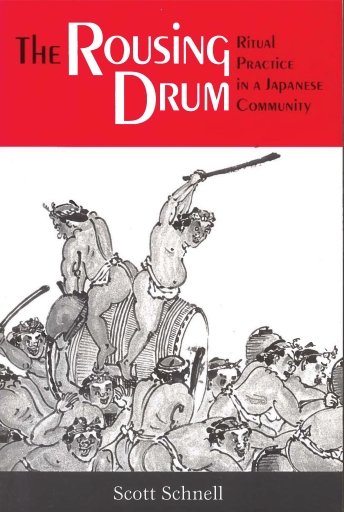
<p>Ritual is too often equated with unvarying or repetitive behavior. This impression is encouraged by the ethnographic tendency toward an overly narrow time frame, which highlights current relationships and conditions rather than long-term developments.<br><br> <i>The Rousing Drum</i> takes a different view. It adopts a historical perspective encompassing several hundred years in exploring the role of ritual as an effective medium for negotiating sociopolitical and economic change. <br><br> The setting is Furukawa, a town located in Japan's mountainous interior. Every spring the local Shinto shrine festival provides an opportunity for enacting social relationships and attitudes. By day, a portable shrine containing the spirit of the guardian deity is escorted through town in a stately procession. At night, however, a different scenario unfolds. A barrel-shaped drum is borne through the nighttime streets on a massive grid-like platform. Prominent members of the community are obliged to ride upon the platform, while teams of young adults rush out and attack it as it passes through their respective neighborhoods. The action can become quite unruly, and random fights and injuries are accepted as inevitable correlates. <br><br> In analyzing the festival over time, Schnell reveals a dramatic transformation. The drum ritual, which originated as a minor preliminary to the other events, emerged during the late 1800s as an occasion for airing hostilities and settling scores. As Japan's modernization progressed, the ritual performance came to embody a symbolic challenge to institutionalized authority, and occasionally escalated into politically motivated violence. While the religious ceremonies observed during the day were appropriated by local power holders, the nighttime drum ritual represented a folk response to the officially sanctioned liturgy. The festival as a whole thus represented the clash of competing ideologies within the context of a single public forum. Today's ritual, rather tame by comparison, is being transformed into a tourist attraction aligned with the town's economic development objectives. <br><br> Schnell's careful examination of the ethnohistorical data offers a valuable new perspective on Japanese festivals as well as the events and conditions that influence their development. His innovative look at ritual behavior over time persuades us that we can grasp the underlying significance of such activities only if we consider them within the context of larger historical patterns.</p>
Kategorien
- Sprache
- English
Teilen
Das könnte dir auch gefallen
Popol vuh
Ana María Pave, Paloma Valdivia (ilustradora)
Domestic folk-lore
Thiselton-Dyer, T. F.
Los brujos del poder
Olmos, José Gil
Kinshasa Convention
Convention, Central African
Smuggling and Other Essays
Various
La Guerra del Paraguay y la construcción de la identidad nacional
María Victoria Baratta