
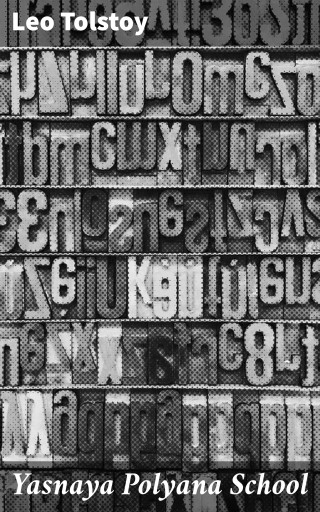
Yasnaya Polyana School
Von Tolstoy, Leo
Herausgegeben von Good Press
English
2021
ISBN 4064066465827
eBook
Buy at LORANCHBOOKSTORE
🇺🇸
 Bajalibros Latam
🇺🇸
Shop besuchen →
Bajalibros Latam
🇺🇸
Shop besuchen →
 LORANCHBOOKSTORE
🇺🇸
Shop besuchen →
LORANCHBOOKSTORE
🇺🇸
Shop besuchen →
 Libros Patagonia
🇨🇱
Shop besuchen →
Libros Patagonia
🇨🇱
Shop besuchen →
 Ebooks Librería Carlos Fuentes
🇲🇽
Shop besuchen →
Ebooks Librería Carlos Fuentes
🇲🇽
Shop besuchen →
 Ebooks Librería Antártica
🇨🇱
Shop besuchen →
Ebooks Librería Antártica
🇨🇱
Shop besuchen →
 Ebooks Happy Books
🇨🇴
Shop besuchen →
Ebooks Happy Books
🇨🇴
Shop besuchen →
 ebooks libreria española
🇪🇨
Shop besuchen →
ebooks libreria española
🇪🇨
Shop besuchen →
 Bajalibros Argentina
🇦🇷
Shop besuchen →
Bajalibros Argentina
🇦🇷
Shop besuchen →
 Alpha Books
🇨🇴
Shop besuchen →
Alpha Books
🇨🇴
Shop besuchen →
 Sanborns Ebooks
🇲🇽
Shop besuchen →
Sanborns Ebooks
🇲🇽
Shop besuchen →
 ebooks Libreria del GAM
🇨🇱
Shop besuchen →
ebooks Libreria del GAM
🇨🇱
Shop besuchen →
 Bookshop Uruguay
🇺🇾
Shop besuchen →
Bookshop Uruguay
🇺🇾
Shop besuchen →
 Ebooks Yenny - El Ateneo
🇦🇷
Shop besuchen →
Ebooks Yenny - El Ateneo
🇦🇷
Shop besuchen →
 Crisol Ebooks
🇵🇪
Shop besuchen →
Crisol Ebooks
🇵🇪
Shop besuchen →
Verfügbar in 14 Buchhandlungen
Bajalibros Latam
🇺🇸
Shop besuchen →
LORANCHBOOKSTORE
🇺🇸
Shop besuchen →
Libros Patagonia
🇨🇱
Shop besuchen →
Ebooks Librería Carlos Fuentes
🇲🇽
Shop besuchen →
Ebooks Librería Antártica
🇨🇱
Shop besuchen →
Ebooks Happy Books
🇨🇴
Shop besuchen →
ebooks libreria española
🇪🇨
Shop besuchen →
Bajalibros Argentina
🇦🇷
Shop besuchen →
Alpha Books
🇨🇴
Shop besuchen →
Sanborns Ebooks
🇲🇽
Shop besuchen →
ebooks Libreria del GAM
🇨🇱
Shop besuchen →
Bookshop Uruguay
🇺🇾
Shop besuchen →
Ebooks Yenny - El Ateneo
🇦🇷
Shop besuchen →
Crisol Ebooks
🇵🇪
Shop besuchen →
Über dieses Buch
In "Yasnaya Polyana School," Leo Tolstoy presents a profound exploration of educational reform inspired by his own experiences as an educator and landowner. The narrative unfolds within the context of his estate, Yasnaya Polyana, where Tolstoy implemented unconventional teaching methods that emphasized moral and intellectual development. Characterized by his trademark blend of realism and philosophical inquiry, the book reflects Tolstoy's belief in the transformative power of education, advocating for a system that nurtures creativity and critical thinking, rather than rote memorization. The work serves as both a personal account and a manifesto for progressive education, situated in the socio-political landscape of 19th-century Russia, at a time when traditional structures were being challenged by new ideas about teaching and learning. Leo Tolstoy, acclaimed for his masterpieces such as "War and Peace" and "Anna Karenina," was deeply influenced by his own tumultuous upbringing and his quest for truth and meaning. His ventures into pedagogy stemmed from a desire to cultivate a more humane and ethical society, driven by a conviction that education should not merely serve economic purposes but also moral and spiritual development. Tolstoy's passion for reforming education mirrors his broader spiritual and philosophical beliefs, which were central to his later works. This book is highly recommended for educators, scholars, and anyone interested in the evolution of educational philosophies. Tolstoy's insights resonate today, as contemporary readers grapple with the role of education in fostering holistic growth and social responsibility. "Yasnaya Polyana School" stands as a timeless call to action for a more compassionate and engaged approach to teaching and learning.
In this enriched edition, we have carefully created added value for your reading experience:
- A succinct Introduction situates the work's timeless appeal and themes.
- The Synopsis outlines the central plot, highlighting key developments without spoiling critical twists.
- A detailed Historical Context immerses you in the era's events and influences that shaped the writing.
- An Author Biography reveals milestones in the author's life, illuminating the personal insights behind the text.
- A thorough Analysis dissects symbols, motifs, and character arcs to unearth underlying meanings.
- Reflection questions prompt you to engage personally with the work's messages, connecting them to modern life.
- Hand‐picked Memorable Quotes shine a spotlight on moments of literary brilliance.
- Interactive footnotes clarify unusual references, historical allusions, and archaic phrases for an effortless, more informed read.
- Sprache
- English
Teilen
Das könnte dir auch gefallen
Pesquisa qualitativa para todos
Taquette, Stella R., Borges, Luciana

Los mejores maestros
Vinacur, Tamara, Alegre, Silvina, Narodowski, Mariano

The Death of Ivan Ilyich
Tolstoy, Leo
Einführung in die Geschichte des Zeichen- und Kunstunterrichts
Legler, Wolfgang
Historia de la enseñanza de la lengua y la literatura
Sardi, Valeria
Bethink Yourselves!
Tolstoy, Leo