What It Means to Have Seen: Andrés Neuman's New Poetry
The title announces a completed action. Vengo de ver — "I come from having seen." Not "I am looking" or "I saw," but the strange grammatical middle ground of the Spanish perfect continuous, which holds the past inside the present like an object still warm from someone else's hand. It is a small thing to notice. Andrés Neuman tends to make his titles do considerable work.
Neuman is one of those writers who resists comfortable categories. Born in Buenos Aires, raised in Granada, he has written novels, stories, essays, aphorisms, and poetry with a fluency that seems to embarrass the borders between forms. Vengo de ver, his new collection, has been described in El Cultural as poetry that "transforms the current crisis into verse, combining astonishment and resistance" — a phrase that, in its compression, captures something of Neuman's method: the capacity to hold opposite impulses in the same line without letting either one win.
I think of Tove Jansson writing in the shadow of catastrophe — not about it directly, but around it, the way light bends around objects it cannot pass through. Neuman works in a similar way. His earlier Pequeño hablante was concerned with language itself as a medium for the self to form — the child learning to speak, the poet reconsidering what speech can bear. Vengo de ver seems to extend that inquiry outward, into a world whose visibility has become both overwhelming and suspect.
What does it mean to have seen? The question feels particularly weighted in a moment when images circulate faster than understanding, when attention has become the scarce resource that power exploits. Neuman, who has written about everything from translation to mortality in El fin de la lectura, brings to this collection the precision of someone who knows how easily language collapses under its own weight if pushed too far.
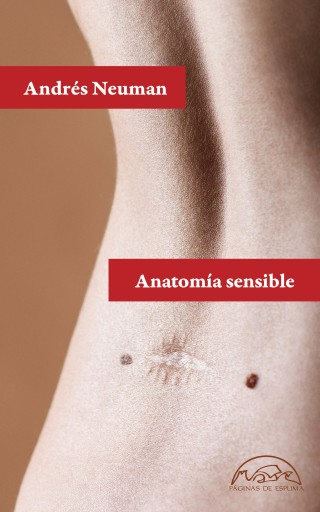
His earlier Anatomía sensible moved along the body as if surveying an interior country. Vengo de ver turns outward, into the noise and residue of the present. The "astonishment" El Cultural mentions isn't naivety — Neuman has been watching too carefully for that. It is the condition of a writer who still finds the world surprising despite everything, and who suspects that this capacity for surprise is itself a form of resistance.
I don't know yet if this is his best work. I do know that it arrived at exactly the right moment, asking exactly the questions I needed someone to ask, in a voice calm enough to make me want to listen. The title is a completed action. The reading is not.