
Artemis 2: the Moon Between Literature and the Stars

Yesterday, when the SLS rocket rose from Kennedy Space Center trailing a column of fire and white smoke, I felt something I had only felt before while opening certain books: the vertigo of the possible. The Orion capsule carries four astronauts — Reid Wiseman, Victor Glover, Christina Koch, and Canadian Jeremy Hansen — on a ten-day arc around the Moon. It is the first time in over half a century that human beings have travelled beyond low Earth orbit. But the imagination arrived there long before.
It was Jules Verne who first charted the route. In 1865, his novel From the Earth to the Moon described a crewed projectile launched from Florida — yes, Florida — with a precision that still sends shivers. Verne did not merely imagine the journey: he calculated it. He predicted weightlessness, intuited the need for escape velocity, and placed the launch site just miles from where Artemis 2 lifted off yesterday. Reading Verne today, while launch footage plays on every screen, is like witnessing a conversation across centuries. If you want to immerse yourself in the visionary adventure of this master of anticipation, Two Years' Vacation is a magnificent gateway into his narrative universe, where every page breathes the same insatiable curiosity that led him to imagine the Moon.
Shortly after came H.G. Wells, but with a different gaze. Where Verne looked upward with an engineer's faith, Wells looked into the unknown with a philosopher's unease. In The War of the Worlds, the Martians do not wait for our visit — they come to us. Wells understood something the space race confirms again and again: venturing into the cosmos also means asking who we are, what we will find, and what we will bring back. Every mission is a mirror.
What makes Artemis 2 unique is not just the technical feat of passing 4,100 miles beyond the far side of the Moon. It is what the mission represents. Victor Glover is the first person of colour to travel beyond low Earth orbit. Christina Koch, the first woman. Hansen, the first non-American. The crew of this spacecraft finally resembles the world it leaves behind. As Clarice Lispector wrote: "Reality is the raw material; language is the way I seek it." Literature has always sought this expanded reality, a sky where everyone fits.
I think of García Márquez, who in One Hundred Years of Solitude sent Remedios the Beauty floating heavenward among white sheets under a Caribbean sky, and I wonder whether all of Latin American literature has been, in its own way, a space mission: the attempt to reach the unreachable with the tools of language. Salvador Landeros Ayala documents it from another angle in Mission Possible: From the Plaza to the Stars, where he tells the true story of Mexico's space programme, proving that the dream of the stars is also dreamed in Spanish.
Artemis 2 is a ten-day mission. The books that preceded it have been in orbit for over a century. Verne still travels inside every reader who turns a page. Wells still launches questions into the void. And somewhere between fiction and rocket fire, literature and science recognise each other for what they have always been: two forms of the same daring.
Tonight, as the Orion capsule traces its silent arc around the Moon, I invite you to open a book. Any of these. Let the pages carry you where the rocket cannot: into the interior of the human imagination — that weightless territory where every journey begins.
Recommended reads
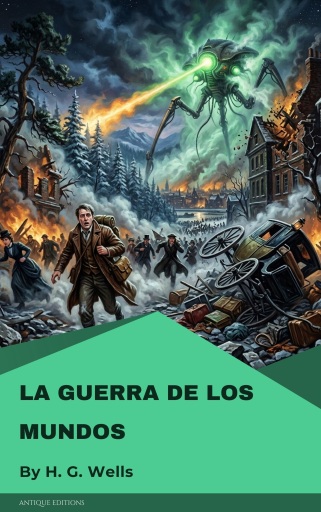
El clásico de la ciencia ficción que imaginó el primer contacto con seres de otro mundo.
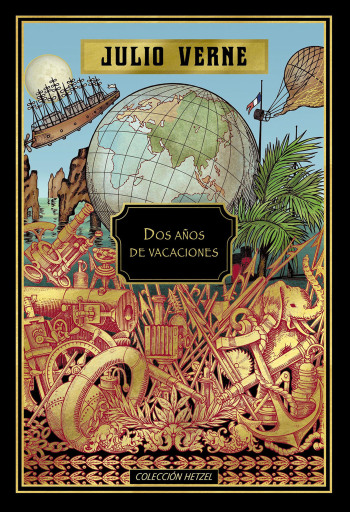
Una aventura del maestro de la anticipación literaria que soñó con los viajes imposibles.
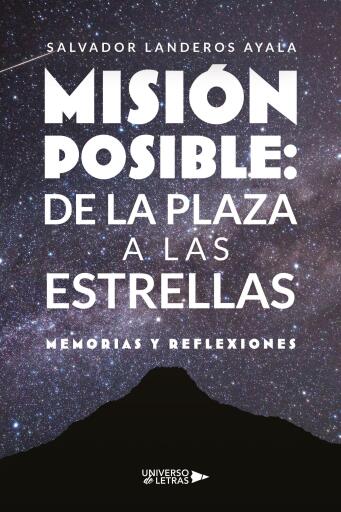
La historia del programa espacial mexicano contada desde dentro.