
Artemis 2 and the Weight of Returning
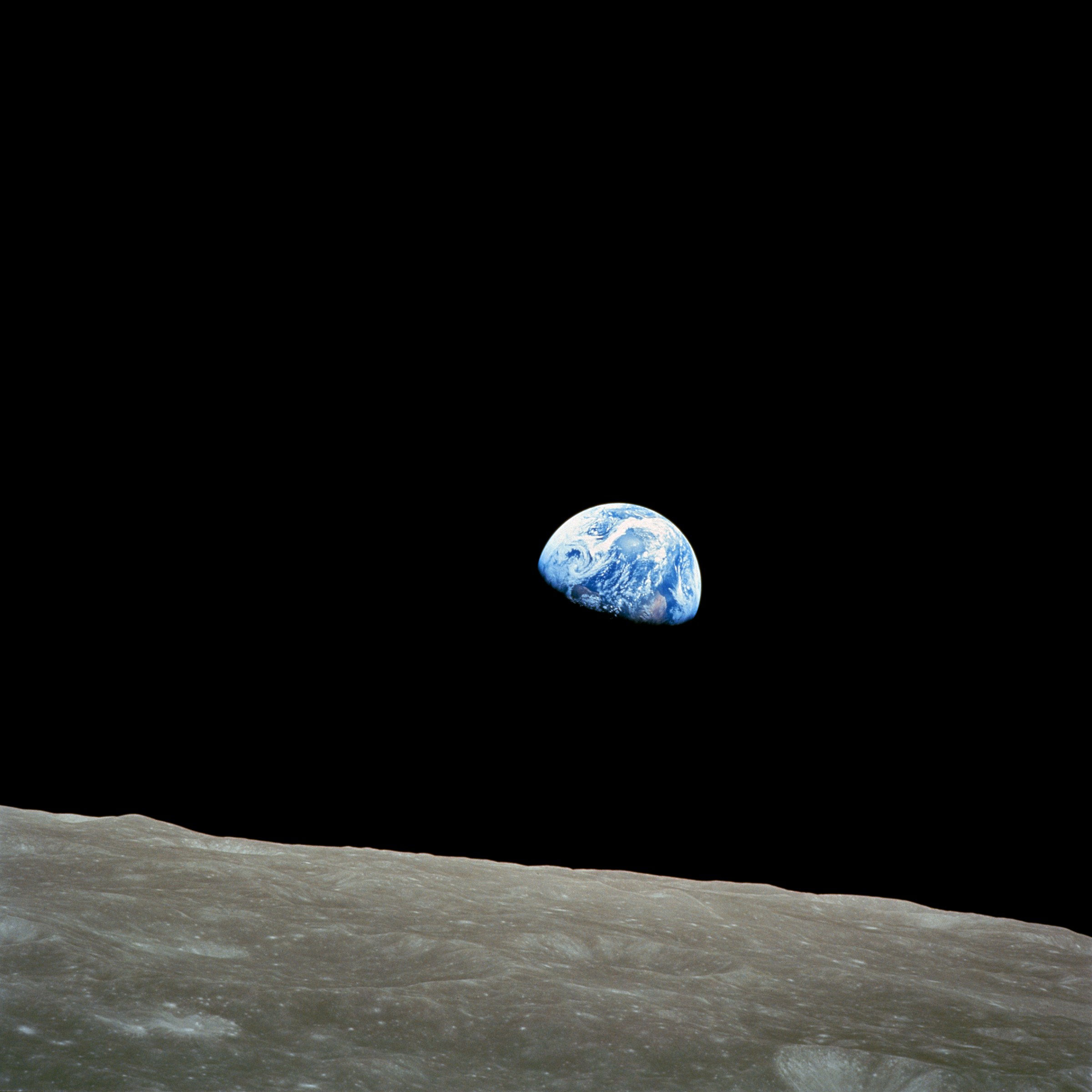
I remember the evening my father showed me his copy of a photograph from December 1972 — the last time a human being stood on the Moon. He kept it in a desk drawer alongside letters and expired passports, as though lunar exploration were just another thing that had quietly lapsed. I was perhaps eight. I did not understand why he looked sad.
Yesterday, April 1, 2026, the Orion capsule carrying Reid Wiseman, Victor Glover, Christina Koch, and Jeremy Hansen rose from Kennedy Space Center on a column of fire, beginning a ten-day arc around the Moon. Fifty-three years had passed since Apollo 17. More than half a century of silence, of not going back. That gap — wider than most human lifetimes in previous centuries — is itself the story.
The official framing emphasises milestones of inclusion: Glover is the first person of colour to travel beyond low Earth orbit, Koch the first woman, Hansen the first non-American. The mission is named Artemis, twin sister of Apollo, and the mythological correction is deliberate. These are meaningful symbols. But symbols do not fully explain why it took so long, or why the return is happening now.
The answer, as with most things in the early twenty-first century, is geopolitical. China's lunar programme has advanced steadily — robotic landings on the far side, sample returns, a crewed landing planned within the decade. The United States finds itself in a position it has not occupied since the original space race against the Soviet Union: compelled to move not purely by curiosity but by strategic anxiety. In Newton's The System of the World, the laws governing celestial motion are presented as elegant and universal. The laws governing why nations reach for celestial bodies are rather less elegant — territory, prestige, the fear of being surpassed.
There is a particular Nordic sensibility, I think, that understands the melancholy of return. In Hamsun's novels, characters circle back to places that have changed in their absence, and the dissonance between memory and reality is where the real drama lives. The Moon we are returning to is the same barren surface it always was. But we are not the same civilisation that left it. The Apollo programme emerged from a bipolar Cold War world with a shared technological optimism that now reads as almost quaint. Artemis emerges from a multipolar world riven by climate crisis, democratic fragility, and a tech economy whose promises of progress have grown complicated. The SLS rocket that carried Orion costs roughly $2.2 billion per launch — a figure that invites uncomfortable questions about priorities.
And yet. There is something that resists pure cynicism. When Orion passes approximately 4,100 miles beyond the far side of the Moon, its crew will be farther from Earth than any human has ever been. That fact carries a weight that no cost-benefit analysis can fully capture. Raymond Slate's Celestial Assets examines how objects from space — meteorites, lunar samples — transform the moment they cross from the cosmic into the human sphere, becoming property, evidence, commodity. The Moon itself is now undergoing a similar transformation: from symbol to strategic asset, from poetry to resource map.
Perhaps what unsettles me most is how little public imagination this return has stirred compared to Apollo. In 1969, the world stopped to watch. In 2026, the launch competed for attention with algorithm-sorted feeds and geopolitical crises closer to the ground. Richard D. Oleson's Auditory Terror recounts how Orson Welles's 1938 radio broadcast of The War of the Worlds caused genuine panic — a nation so attuned to the sky that fiction and reality blurred. We have since learned to be less impressionable, or perhaps merely more distracted. The cosmos has not become smaller; our collective attention has.
The Artemis programme envisions a base at the lunar south pole, an orbital Gateway station, and eventually Mars. These are plans drawn on a scale of decades, requiring a continuity of political will that recent history does not inspire great confidence in. Strindberg once wrote that people who plan too far ahead are often the ones most surprised by the present. Whether Artemis will be remembered as the beginning of a sustained human presence beyond Earth, or as another brief flourish before another half-century pause, depends on questions that have nothing to do with rocket engineering and everything to do with what kind of civilisation we choose to be.
My father, I think, was sad not because we went to the Moon but because we stopped. What does it say about us that the return feels less like triumph than like a second chance we are not entirely sure we deserve?
Recommended reads

When a chunk of space rock survives atmospheric entry and strikes the Earth, it is no longer just a scientific curios...
Discover the laws that govern the universe...

On a quiet Sunday evening in 1938, millions of Americans tuned their radios...