Bobuq Sayed's Debut Novel Is About Queer Afghan Men in Istanbul — and Also About Us
Question: when did you last read a debut novel that made you think about James Baldwin, desire as a political act, drones over Kabul, and how broken the idea of the 'American Abroad' really is — all in the same afternoon?
Because No God but Us, Bobuq Sayed's debut novel (2026), does exactly that. The setup: Delbar is an Afghan-American who flees to Istanbul after being outed to his DC diaspora community. There he meets Mansur, an Afghan refugee who fled Tehran. Two queer Afghan men, in a city split between East and West, trying to work out what is owed to whom and whether love can exist outside of fear.
Sayed talks openly about his debt to Baldwin's Giovanni's Room — the canonical novel of the American in Europe who cannot be himself — but notes that Baldwin never gave both characters a voice simultaneously. No God but Us does. Delbar and Mansur do not share the same experience of being Afghan, or queer, or poor, or privileged, or refugee, or citizen. That, says Sayed, is precisely the point: 'We get to see the ugliness of the American subjectivity, how much it excuses, and how much it gets away with.' A debut that leads its first interview with that is not playing it safe.
What interests me most is that the novel refuses consolation. The Afghan diaspora carries decades of imperial war — Soviet, American, Taliban — and that does not resolve itself with love in a beautiful city. Ellbogen by Fatma Aydemir — about a girl of Turkish origin born in Berlin, always being defined from outside — feels like a cousin text: the experience of existing in a place without belonging to it.
The question No God but Us asks — can desire exist outside of power? — is not new in queer theory. But in narrative fiction, in a first novel, with two simultaneous voices and neither granted more authority, it lands differently. Think Borges meets Pizarnik, both agreeing the labyrinth has no exit but the architecture is worth the visit.
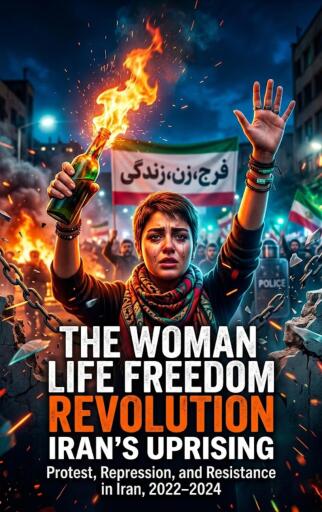
For those wanting more context on what it means to live under regimes that criminalize identity in the same geography Sayed maps, The Woman, Life, Freedom Revolution by Clara Jensen documents the Iranian uprising with an urgency that speaks directly to the escape routes Mansur takes.
What do I think of No God but Us in summary? It is the kind of debut that makes you feel how long it has been since you read something that genuinely mattered. Read it.