What the Mirror Said: Caitlin Clark's Children's Book and the Literature of Aspiration
There is a mirror somewhere in Ames, Iowa, that apparently changed everything. It hung in Caitlin Clark's childhood bedroom, and on it were written the words: "The difference between ordinary and extraordinary is the little EXTRA." Clark read it every day. She became, at twenty-two, the NCAA's all-time leading scorer. She transformed women's basketball in America. And now she has turned that mirror — and the motto beneath it — into a children's picture book.
EXTRAordinary! A Little EXTRA to Reach BIG Dreams (Random House Books for Young Readers, November 2026), illustrated by Adriana Predoi and aimed at children aged four to eight, follows Clark into the genre of celebrity inspiration books — a crowded shelf populated by athletes, astronauts, and pop stars who have discovered that their story has a moral. Clark is twenty-four. She is, by any measure, ahead of schedule.
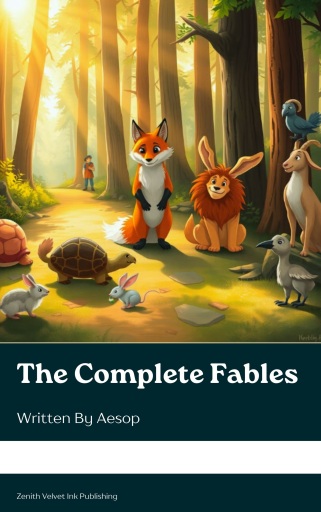
I do not say this to be dismissive. There is something worth sitting with in the persistence of this form — the picture book as vehicle for aspiration. From Aesop's fables, which generations of children have encountered in editions such as The Complete Fables, to the great fairy tale anthologies like The Blue Fairy Book, children's literature has always been partly in the business of forming character — of suggesting what a person might become, what effort might yield, what the world rewards.
What has changed, perhaps, is the person delivering the message. In an earlier era, the wisdom came from anonymous tradition — from wolves and foxes and miller's daughters. Now it comes directly from a named, visible success whose biography can be verified, whose jersey number is known. The lesson is the same. The pedagogy is different. Whether one is better than the other is not, I think, a settled question.
Clark's literacy initiative with Scholastic, running alongside the book's release, will reach over 26,000 students. That is not a small thing. Books get children reading; reading gets children somewhere. That mirror in Iowa may have whispered only one word, but the trajectory it set in motion is, at this point, well documented.
Whether a picture book can do for another child what that mirror did for Clark — that, I think, is the genuinely open question.