Dave Eggers’ ‘Contrapposto’: On the Rarity of Writing Long Friendships
There is something I have wondered for years, living between languages and literary traditions: why is it so rare to find, in fiction, the kind of long friendship between a man and a woman that is, in life, entirely ordinary? The Scandinavian novel does not particularly struggle with this — Tove Jansson wrote Moomin friendships that float above gender entirely — but in the Anglo-American tradition, cross-gender friendship tends to dissolve, at narrative convenience, into something else.
Dave Eggers, who has been thinking about this “always,” has finally written that friendship novel. Contrapposto, published by Knopf and edited by John Freeman, spans decades in seven sections, following Cricket and Olympia through the arc of a long life. Publishers Weekly has called it “a tour de force.” Freeman described Eggers as “a Victorian scale talent, there’s no hiding that.” High praise, and not misplaced.
The title is a reference to the sculptural term — the classical pose in which a figure shifts weight onto one leg, creating a natural asymmetry, a sense of motion in stillness. It suggests something about Eggers’ project: friendship, too, is a kind of contrapposto, a balance that only works because it’s not perfectly symmetrical. One person carries more at some moments, the other at others.
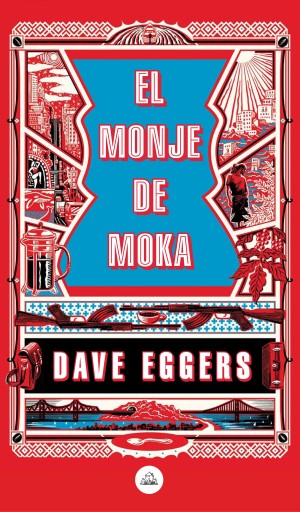
Eggers is not an author one associates with restraint. His debut, A Heartbreaking Work of Staggering Genius, was maximalist, grieving, and impossibly young. The Monk of Mokha was journalism stretched to novelistic length, a portrait of a man trying to revive Yemen’s coffee culture. Heroes of the Frontier was something else again — wild, American, on the road. But the thread through all of them has been commitment to the human-scale story, to particular people in particular situations.
Contrapposto took what Eggers calls “an especially long time to gestate and make its correct form known.” He works in Quark, an outdated software that few writers still use, submitting manuscripts as PDFs that require almost no editorial intervention. It is a method that produces clean copy — and a finished thing that arrives as a finished thing.
What Contrapposto seems to be asking, at its core, is a question worth sitting with: what does it cost to stay close to someone for decades? What changes? What remains a settled fact between two people who knew each other before the world finished shaping them?
I don’t have answers. But I know that the novels that ask these questions honestly — quietly, without trying to resolve them — are the ones I still think about years later.