
On the Students Who Would Not Let Their Libraries Be Emptied
In the small city of Elizabethtown, Pennsylvania, a group of high school students recently did something quietly remarkable: they refused to let their school library be emptied in silence. The district had been removing books and cutting library funding — part of a broader movement across the United States in which school boards, responding to pressure from organised parent groups, have been withdrawing titles deemed inappropriate. One student, photographed at a protest, carried a sign reading: «I cannot let these doctrines be the face of my education.» It is difficult to read that sentence without feeling something very old stirring.
I think of something Tove Jansson wrote in one of the later, stranger Moomin books — not the charming illustrated ones people give to children, but the ones where the characters are sometimes alone in genuine darkness. She wrote, almost accidentally it seems, about what it means to be left without the stories that belong to you. The removal is always presented as protective. It never is.
The American book ban movement is not new, but it has accelerated dramatically. Thousands of book removal instances have been recorded in U.S. schools in recent years — a figure that would strike most Europeans as extraordinary, given that the continent's memory of what happens when authorities decide which books citizens may read remains recent enough to carry weight. The books most frequently targeted — those dealing with race, sexuality, gender, trauma — are precisely the ones that have historically been most necessary to the readers who needed to see themselves in a sentence.
What these students understand, and what I find myself wanting to say quite directly, is this: the removal of a book from a school library is never merely administrative. It is a statement about whose experiences are considered real, whose voices are considered safe, whose stories are considered worth preserving. There is something in Nordic literary culture that has always held the book as a civic object — not sacred, not untouchable, but belonging to the community that reads it. The library is common ground.
When Knausgård writes about the books he read as a child, hiding in his room from a difficult father, he is not writing about escapism. He is writing about what books actually do: they make a space inside of language where a person can exist without permission. The students in Elizabethtown seem to understand this in a way their school board may not.
I hope their protest becomes a habit.
Recommended reads
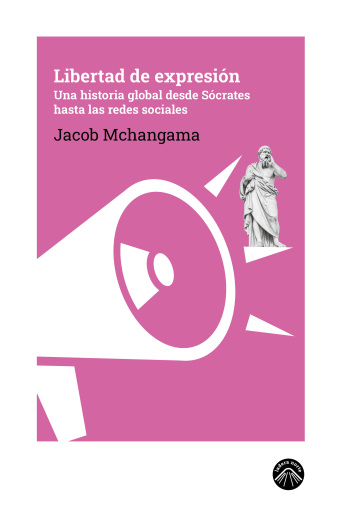
La libertad de expresión es la condición que hace posible la democracia, pero también el derecho más frágil y cuestio...

How power has always claimed the right to decide which ideas are permitted. A historical examination of censorship as...