The Apache World Nobody Told: Álvaro Enrigue's Now I Surrender

Some books arrive late and arrive well. Now I Surrender, Álvaro Enrigue's novel originally published in Spanish in 2018, has finally reached English-language readers in Natasha Wimmer's translation — and it carries with it something rare: the ability to reopen a wound we didn't know we had.
The wound is this: for decades, the story of the Apache people has been narrated from north of the Rio Grande. Hollywood westerns, cowboy mythology, the triumphant gaze. Álvaro Enrigue, a Mexican novelist who now teaches Latin American literature at Hofstra University, asked a different question: what about Mexico? What did Mexico do to the Apaches? The answer filled him with shame — and with words.
The novel weaves three storylines with operatic precision: a Mexican lieutenant colonel pursuing an Apache band that has kidnapped a woman from the border town of Janus in 1836; the final march of Geronimo's dwindling followers in the days before their surrender at Skeleton Canyon in 1886; and a contemporary writer — a thinly veiled mirror of Enrigue himself — on a road trip across the Southwest with his scattered family, searching for the ghosts of Apachería. That lost country spanning Sonora, Chihuahua, Arizona, and New Mexico, now reduced to desert and silence.
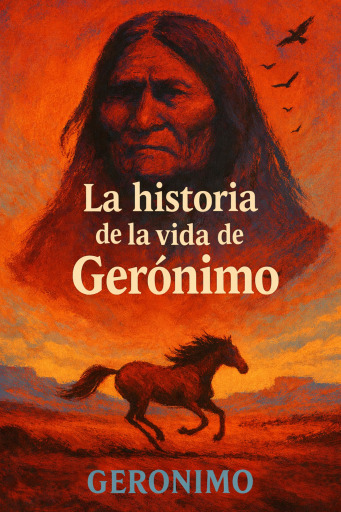
I remember reading, as a girl in Bogotá, La historia de la vida de Gerónimo — Geronimo's own account, dictated to S. M. Barrett in 1906 — and feeling I was touching something ancient that the land hadn't finished releasing. Enrigue carries that same feeling into the novel: Geronimo is "nitroglycerin," he writes. Touch him and he explodes.
What moves me most in this book — and Enrigue has said it with a frankness that is almost uncomfortable — is the act of reparation embedded in his road trip. Standing at graves, at landscapes that were once an entire nation. "As a Mexican, it was a way to say: I'm sorry." Not every writer has the courage to write from historical debt without turning it into spectacle or self-indulgence.
The influence of Roberto Bolaño is visible and acknowledged — Natasha Wimmer also translated Bolaño, a connection Enrigue greets as a kind of signature in the text — but Now I Surrender has its own cadence, its own way of holding epic and irony together. The final section, titled "Aria," closes the novel like a soft blow. I won't say more.
Find this book. And if while you wait you want to understand the Apache fascination that runs through Latin American readers of another generation, try Deseo de ser piel roja by Miguel Morey — an essay that is part confession, part love letter.