A Machine Walks into Granta: The Commonwealth Prize and the Question No One Wants to Answer
Here is what we know. A story called "The Serpent in the Grove," attributed to Jamir Nazir, was published in Granta as a regional finalist for the Commonwealth Foundation Short Story Prize — selected from 7,806 entries. Here is what we strongly suspect: a language model wrote it. A Wharton professor ran it through an AI detection tool that returned 100% probability of AI origin. Literary analysts noted the stylistic markers: heavy parallelism, epistrophe, lists of three, strained similes. Nazir's digital footprint amounts to a 2018 self-published poetry collection and a LinkedIn profile cheerfully promoting generative AI. The Commonwealth Foundation has announced it is "currently reviewing its selection process."
This is, in other words, a proper mess.
Let us be clear about what has actually happened. A prize of some prestige, administered by an institution that presumably employs people capable of reading fiction, selected a story that expert analysts believe was written by software. The judges either did not notice, or did not think it mattered. Both possibilities are troubling in their own way.
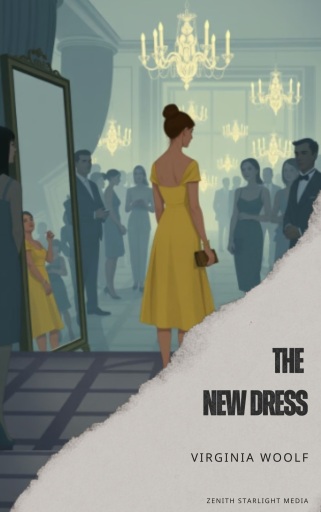
The publishing industry has spent three years arguing about where AI belongs in creative work — in research, in editing, in marketing copy. Fine. The question of whether an AI could write a short story worthy of Granta was, many assumed, still safely theoretical. "The Serpent in the Grove" appears to have settled that debate rather earlier than expected. Virginia Woolf wrote The New Dress, a story about the terrifying gap between how we see ourselves and how others see us. One imagines she would have found the current situation instructive.
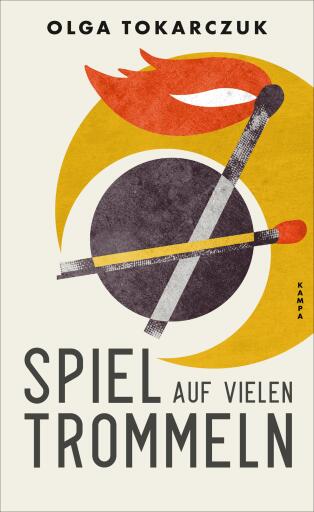
What this episode reveals is not that AI can write — hardly a surprise — but that the institutional systems designed to evaluate literary merit are not yet equipped to detect its outputs. Judges read for something. What they read for, apparently, was not human origin. Olga Tokarczuk, who this week found herself defending her forthcoming novel against AI accusations — entirely false ones, as it turned out — might have a thought or two on the irony.
There is a temptation to treat this as a technology story. It is not. It is a story about what literary institutions value, and whether they have been honest with themselves about what they are actually measuring when they read. A prize is not simply a recognition of craft. It is a statement about what a culture wants to preserve.
The Commonwealth Foundation is reviewing its process. That seems reasonable. One might also suggest it review its assumptions.