The Thread Han Kang Has Always Been Pulling
S
Sigrid Nørgaard
·
4 min read
I remember reading an essay once — by Tove Jansson, or perhaps it was Knausgård, those two have a way of blurring in my memory — about the problem of translation. The idea that every book you love in a language that is not your first arrives already slightly bent, already carrying the trace of someone else's decisions. I thought about that essay while reading Light and Thread, Han Kang's first nonfiction book published in English, because this is a work that asks, repeatedly and with great seriousness, what it means for a piece of writing to reach another person at all.
The book is a gathering: the Nobel Lecture she delivered in Stockholm in December 2024, alongside diaries, poems, and photographs from across her career. It is less a retrospective than a meditation. Kang does not look back to explain herself. She looks back to understand something about language itself — what it does between two people, what it risks in the going.
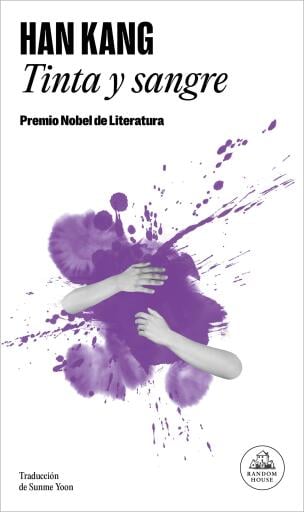
The central image is drawn from a childhood poem she wrote, imagining "a gold thread connecting between our hearts." It is an image she returns to in the Nobel Lecture, and it gives the book its shape. In her fiction — in Human Acts, in the recently published early novel Tinta y sangre — language has often appeared as an instrument of violence or suppression, something done to bodies and minds. Light and Thread makes a different argument. Here, writing is described as an antenna, reaching across silence toward an unknown receiver. "I experience again the thread of language that connects us," she writes, "how my questions are relating with readers through that electric, living thing."
What strikes me most is the shift in voice. Kang's fiction tends toward the oblique — careful distances, withheld comfort, the damage done by what is left unsaid. Here, in nonfiction, she addresses the reader directly, sometimes in second person, with a nakedness that feels hard-won rather than chosen for effect. The exposure of the inner self through words is, she suggests, a form of vulnerability that also constitutes proof of connection. To write honestly is to take the risk of being found.
For those of us who read her in translation — which is to say, for most of her readers — there is something additionally moving about Light and Thread. Her fiction reaches us already through the thread of another writer's choices. This book arrives in English as something closer to her own voice, mediated but less so. The gold thread is a little shorter.
There is a question lurking in all of this, one that Kang does not answer directly, and probably cannot: whether language, in the act of connecting, also inevitably distorts. Whether the thread between two minds is a link or a translation. After reading her, I am inclined to think it may be both at once — and that this doubling is not a failure of communication but perhaps its most honest form.
What does it mean to write for a reader you cannot see? Kang's answer, offered quietly in these pages, is that you write anyway, and trust the thread to hold.