
Helen DeWitt Turned Down $175,000. The Literary World Has Opinions.
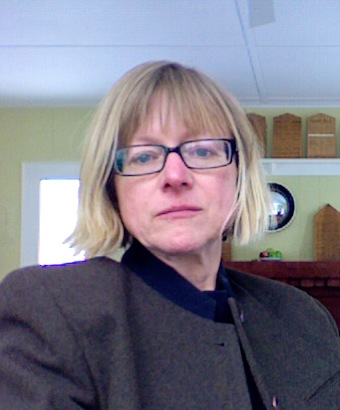
There is a particular kind of discomfort that arrives when a writer refuses money. Not the polite, theatrical refusal — "I couldn't possibly" — but the genuine one, the kind that comes with a public explanation and a thread on X that thousands of people read and immediately disagree about. Helen DeWitt, author of The Last Samurai, posted in April that she had been told she won a Windham-Campbell Prize worth $175,000, then turned it down. The reason: the prize required a podcast appearance, a contribution to the Yale Review, attendance at a September festival at Yale, and — the detail that broke her — an immediate audio interview and video, to be recorded while she was in Amsterdam with failing Wi-Fi and a phone running low on data.
What happened online was predictable. Novelist Joey Comeau asked, reasonably: what is the prize actually for, the artist or the institution's publicity machine? Cathy Park Hong, equally reasonably, pointed out that for $175,000 most people find a way to access Wi-Fi. Both positions are correct. This is one of those situations where the facts fit several incompatible narratives at once.
I have been thinking about what it means to structure a prize around obligations that begin before the prize is announced. DeWitt was not told about the requirements until after she was informed she had won — at which point declining felt, to her, like the only option that preserved something she could not quite name. "When the mind cracks up things can get very bad," she wrote. This is not a woman performing artistic integrity. This is a woman describing a threshold, the precise point at which the cost of saying yes becomes higher than the money.
Knausgård once wrote about how the act of writing is partly the act of being left alone — not pampered, not protected, but simply not interrupted. There is a long European tradition, from Ibsen to Beckett, of artists who understood that the machine of recognition can consume the very thing it claims to celebrate. DeWitt's refusal is not heroic. It is probably not wise, in any practical sense. But it illuminates something that prize culture rarely acknowledges: that the conditions attached to money are themselves a form of editorial pressure, and some writers are not built to absorb it without cost.
The Windham-Campbell Prizes are, by most accounts, generous and well-intentioned — $175,000 with no strings attached, said the press releases, except there were strings, as there always are. What DeWitt's thread revealed is that the strings exist before the announcement, in the form of required media participation, and that writers who struggle with exactly that kind of exposure are quietly screened out not by jury decision but by the fine print. Whether this is a flaw in the prize or simply the reality of how institutional recognition works in 2026 is a question worth sitting with.
She did not ask for sympathy. The internet gave it anyway, along with its opposite. What stays with me is not the number — $175,000 is not an abstraction, it is years of working time — but the image of a writer in a Dutch apartment, phone dying, being told that the award she had just won required her to perform, immediately, in a medium she could not manage that day. The prize that asks for the artist's public self before it gives anything to the artist's private one.