
Lyndal Roper Wins the 2026 Holberg Prize for 'Outstandingly Original' Scholarship

My father had a copy of Roper's Witch Craze on his shelf for years — one of those books that arrives in the house and stays, not because it is comfortable but because it refuses to let you look away. I remember reading it as a student and feeling that particular discomfort of encountering a historian who takes the irrational seriously without pretending it was rational all along.
The Holberg Prize, awarded annually to a scholar in the humanities or social sciences for outstanding contributions to knowledge, has this year gone to Lyndal Roper — described by the selection committee as an "outstandingly original" scholar whose work has reshaped how we understand the Reformation, witchcraft, and the psychic life of early modern Europe.
Roper, who holds a chair at Oxford, has spent her career insisting on the embodied, emotional, and unconscious dimensions of historical experience. Her biography of Martin Luther, published in 2016, was remarkable partly for what it was willing to speculate: not just what Luther did, but what drove him, what he feared, what his body meant to him and to his followers. It was the kind of history that makes other historians nervous and general readers grateful.
The Holberg Prize, worth roughly 700,000 euros, is named after the Norwegian playwright Ludvig Holberg and is sometimes called the humanities Nobel. Whether it deserves that comparison is a question every Nobel committee probably resents, but the prize has generally been given to scholars who are both genuinely influential and capable of writing for readers beyond their immediate field. Roper qualifies on both counts. The question her work leaves open — how much of the past is irrational, and what it means to take that irrationality seriously as history — is one that historians will be arguing about for some time yet.
Recommended reads

Olive Schreiner's seminal novel, "The Story of an African Farm," intricately weaves a narrative of the South African lan
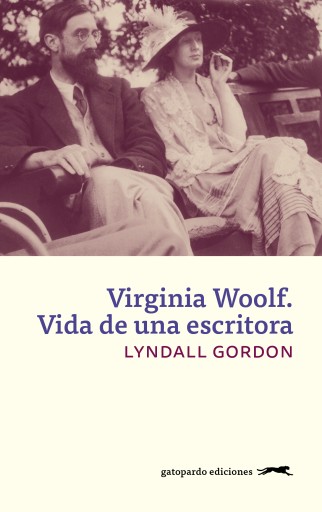
Ganador del Premio James Tait Black Memorial, este estudio sobre la vida y la obra de Virginia Woolf —en una nueva versi

En el V centenario de la Reforma, Taurus publica la biografía definitiva de Martin Lutero. Cuando Martín Lutero clavó un