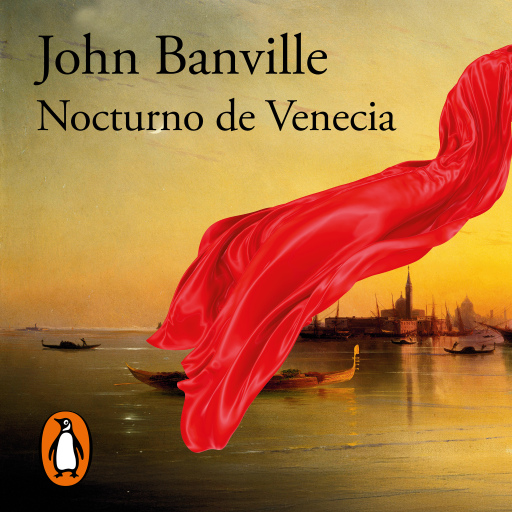
John Banville in Venice: On Not Caring About the World
I read John Banville's remark the way one reads a provocation designed to look like candour. "As a writer," he told El Cultural this week, "society, wars, or the world matter little to me." It is exactly the kind of statement that gets writers into trouble in 2026, a year in which the world seems particularly insistent on being noticed. Hamsun said something not entirely different, and the comparison hangs in the air uninvited.
But Banville is not Hamsun, and his new novel Nocturno de Venecia is not a political statement. It is, if the early reception is to be believed, precisely what Banville has always done: prose that operates at a register so sustained and demanding that plot becomes almost incidental, an intrusion from a noisier world. The review that described him as still playing "in another league" had the ring of tired admiration—the kind one reserves for things that have been excellent for so long that excellence itself becomes exhausting to acknowledge.
Venice is a natural home for Banville. It is a city that has outlived its historical moment and now exists almost entirely as a surface—beautiful, decaying, indifferent to the concerns of whoever happens to be looking at it. The same might be said, not unkindly, of Banville's prose style. It has always preferred the particular texture of a thing to what the thing might mean. The way light falls through an archway matters more than the person walking through it.
I think of Tove Jansson, who spent the last decades of her life on a small island with no electricity, writing novels of radical domestic enclosure. Not indifference to the world—something more deliberate. A refusal to be pulled by the current of events. There is a Scandinavian concept, ro, which has no precise English translation but means something like peace found in smallness. Banville, Irish and relentlessly European in his literary allegiances, achieves something adjacent.
Whether one finds this admirable or evasive depends, I suppose, on what one asks of literature. Some readers need novels to engage; others need them to resist. Banville has spent forty years building a case for the second position, novel by novel, each one a small argument for the value of paying very close attention to a very small thing.
Nocturno de Venecia is, by that logic, the argument continued. Venice. A night. Whatever happens—happens slowly, precisely, in sentences that do not permit the reader to read quickly. Whether the world outside has the patience for it is, perhaps, the more interesting question.