The Scroll and the Poorest Man

There is a line that has stayed with me since I first read it, years ago, somewhere between Copenhagen and Madrid: “Jack was the poorest person I ever met.” It was Joyce Johnson who said it, Kerouac’s girlfriend in the autumn of 1957 when On the Road was published and the world decided he was a symbol, a prophet, a voice. He was already almost gone.
On March 12 of this year — what would have been Kerouac’s 104th birthday — the scroll on which he had typed that novel in a furious three-week rush sold at Christie’s in New York for $12,135,000. A world record. Not just for a 20th-century manuscript. For any literary manuscript, anywhere, in any period. It surpassed a Shakespeare First Folio.
I have been thinking about what that means. Not morally — one does not argue with the market when it happens to be right about something — but aesthetically, culturally: what are we paying for, exactly, when we pay twelve million dollars for a roll of paper?
Part of the answer is simple: scarcity, provenance, the collector’s logic that has always governed such exchanges. In 2001, the same scroll sold for $2.43 million to Jim Irsay, owner of the Indianapolis Colts. The new buyer is Zach Bryan, a country musician from Oklahoma who seems to have decided that Kerouac’s legacy is, in some sense, his responsibility. Bryan has also purchased the St-Jean Baptiste Church in Lowell, Massachusetts — the Franco-Canadian parish where Kerouac was baptized, where his funeral was held — and is working with the Kerouac Estate to transform it into a museum and cultural center. There is something both touching and strange about a country singer presiding over the resurrection of the Beat Generation’s most iconic figure. Kerouac was himself profoundly interested in music — he wrote about jazz the way Karl Ove Knausgård writes about rock: from the inside, from the body, from somewhere just below speech.
But twelve million dollars. I find myself returning to the scroll itself — not as an object but as a gesture. Kerouac taped together sheets of tracing paper so he would not have to stop typing to change pages. The unbroken flow was the point: the manuscript as performance, as evidence. You can read On the Road in a clean paperback edition and receive the words precisely as he wrote them. But the scroll carries something else — the heat of the making, the physical insistence that this happened, that someone stayed up for weeks and poured out 120 feet of novel and then, eventually, died the poorest person someone who loved him had ever met.
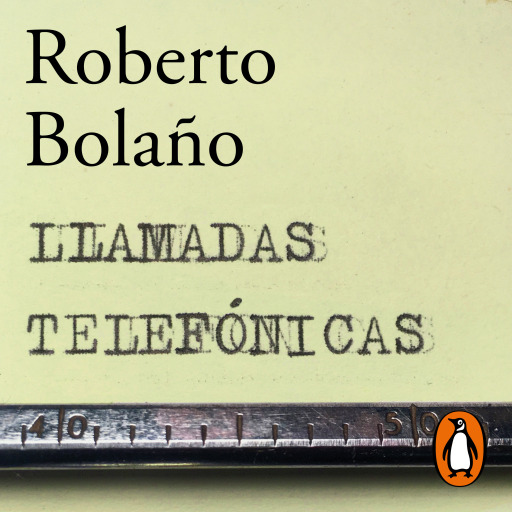
Roberto Bolaño — who translated Kerouac’s poems into Spanish, who in Llamadas telefónicas wrote about poets and writers destroyed by their own seriousness — understood this dimension of literary creation deeply. “He wrote himself to death” is how Bolaño described writers he truly admired, and perhaps how he saw himself. The scroll is proof of that particular seriousness: it exists as the body of the work, not just the text.
What I cannot entirely explain is the market’s arithmetic. Twelve million for the trace of a man who could not afford to eat. There is something we are trying to buy here that cannot be bought. The scroll will sit in a museum in Lowell, behind glass, in a city that Kerouac fled and returned to and was buried in. Visitors will come. They will look at the paper. They will wonder, perhaps, what it would have felt like to be that urgent, that poor, that alive.