Kevin Young Wins the World's Richest Poetry Prize. Now, Does Anyone Care?
Four hundred and sixty-one poetry collections, from forty-two countries, were submitted for consideration. One won. This is the mathematics of the Griffin Poetry Prize, which this week awarded its C$130,000 purse to Kevin Young's Night Watch — and if you have not heard of either, this is less a reflection on Young than on how reliably poetry fails to make the front page.
Young is not an obscure figure. He served as poetry editor of The New Yorker, directed the Schomburg Center for Research in Black Culture in New York, and has spent a career working the seam between blues, grief, and American racial history with a precision that most critics can name but few can replicate. Night Watch, his latest, layers Dante's terza rima over blues structures to examine loneliness, the Carolina Twins, and what the judges called "American racial legacies" — a phrase that manages to be both exact and wonderfully evasive.
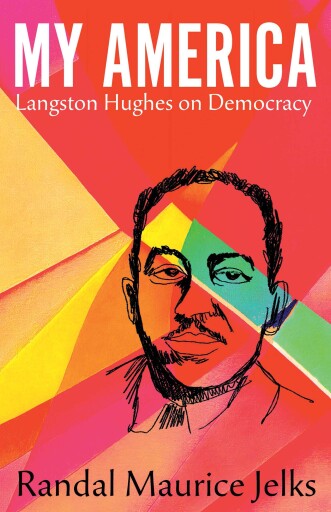
The prize committee — Andrea Cote, Luke Hathaway, Major Jackson — selected Young from those 461 submissions, which is either a rigorous act of curation or an exercise in managed anxiety, depending on your faith in committees. What they identified in Night Watch is something worth taking seriously: the blues not as nostalgia but as epistemology. Young's influences run from Langston Hughes — whose radical international life is explored with comparable care in works like My America — to the First World War poet Isaac Rosenberg, who also understood grief as formal structure rather than personal indulgence.
There is, of course, the usual paradox: the Griffin's stated mission is to make poetry visible, and every year it does so by announcing a winner whom most readers will not read. The C$130,000 will not change this. Poetry's problem has never been funding; it has been the cultural agreement that verse is for specialists or for grief, and not much else. Young's work refuses this agreement, which is why it tends to unsettle the people who enforce it.
The remaining finalists each receive C$10,000 — a sum that is generous for poetry and almost nothing for anything else. Their names have not been released in full. Meanwhile, Night Watch sits in the world, doing what prize-winning poetry always does: waiting to be read by the people who are not currently reading it.
Whether the Griffin changes that is, as ever, an open question. But it is at least the right question.