'Roots' Returns to Knox County Schools — But the Fight Isn't Over
There are books that libraries cannot keep quiet. You pick them up and feel the pulse of something larger than paper itself: resistance, memory, the witness who refuses to let history be erased.
On May 28th, Knox County, Tennessee — a school district of more than 60,000 students, centered on Knoxville — returned Alex Haley's Roots: The Saga of an American Family to its school library shelves, just weeks after removing it. The official reason for the removal had been a state law about materials 'appropriate for the age' of student readers. The real reason, as always, was more uncomfortable: Roots tells the story of Kunta Kinte, a man captured in Gambia and enslaved in America, and of his descendants across generations. A book that forces you to look at what many prefer to ignore.
Superintendent Jon Rysewyk said something worth keeping: 'Removing any book from circulation is, and should be, an immense decision. Our intent will always be to err on the side of access.' Beautiful in theory. Necessary, always.
I remember the first time I encountered the echo of Roots — not the book itself, which came later, but the conversation that surrounded it, that shadow some adults carried when they mentioned it, as if it were too large to name carelessly. Then, the book. Haley's saga is not easy reading: it is dense, long, brutal in its details. But it is precisely that density which makes it impossible to look away. This is not metaphor or allegory. It is testimony built brick by brick.
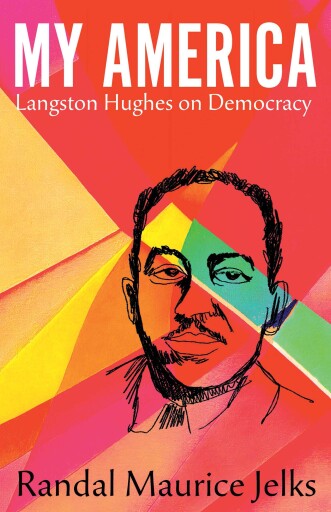
Literary censorship in the United States remains an open wound. It is no coincidence that the most frequently banned books are those that speak of bodies the powerful would rather render invisible: Black bodies, queer bodies, bodies that suffered and survived to tell the story. Banning a book does not make history disappear — it ensures that the young people who need it most grow up without access. To understand the tradition of Black American writers who turned their lives into political testimony, there is something remarkable in My America by Randal Maurice Jelks — a portrait of Langston Hughes as a young radical and global citizen, in the cities that shaped him.
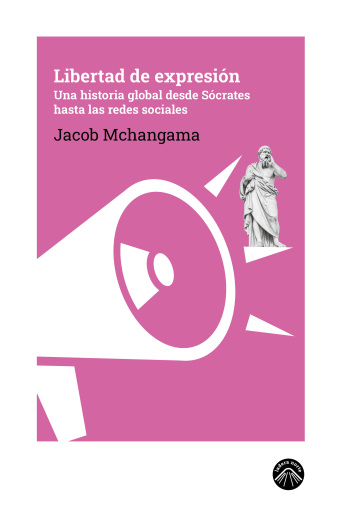
The essayist Jacob Mchangama, in Free Speech, traces the ancient history of the right to speak — and of its limits, its betrayals, its paradoxes. Reading it alongside Roots is to understand that this struggle is not new, and that it will not end with a single bureaucratic reversal in Tennessee.
I am glad Knox County stepped back. But what concerns me are the districts where the same story ends differently — where the books do not return, where a fifteen-year-old will never reach Kunta Kinte because someone decided it was too much. If you have Roots on your reading list, now is the time.