What Books Are For: Kyiv's Literary Festival Opens Under Artillery
The 14th International Book Arsenal Festival opened in Kyiv on May 28, four days after a Russian missile and drone attack destroyed or damaged several of the city's most storied cultural institutions — the National Philharmonic, the Music Academy, the National Art Museum, the Yaroslav Mudryi National Library. This information is not context. It is the event itself.
The festival's theme this year is “Bear Your Freedom.” Its curator is Maksym Butkevych — journalist, human rights activist, serviceman, former prisoner of war. These are not honorary titles. They are the record of a life that has met the exact problem the festival is trying to address: what it means to remain a person who reads, thinks, and makes meaning when the world is actively trying to make that impossible.
Literary festivals, as a rule, have a rhythm that tends toward celebration — toward the spectacle of literature as a pleasant shared luxury. The Kyiv Book Arsenal, in this context, is something different. When you choose to run 240 events across five days with over 150 publishers while your concert halls are still smoking, you are not celebrating literature. You are making an argument with it.
Butkevych, who was held as a prisoner of war by Russia before being exchanged, could have chosen any theme. He chose freedom — not as an abstraction, but as a daily practice, a resistance against the forces that would reduce human beings to their usefulness and nothing more. This is the register in which Eastern European literature has always spoken, when it has been allowed to speak at all. The Brothers Karamazov is not, finally, a novel about theology or family structure. It is a novel about what it costs a person to live in good conscience in a world that systematically punishes conscience. Dostoyevsky knew this cost from experience — he had been led to a mock execution before being sent to Siberia.
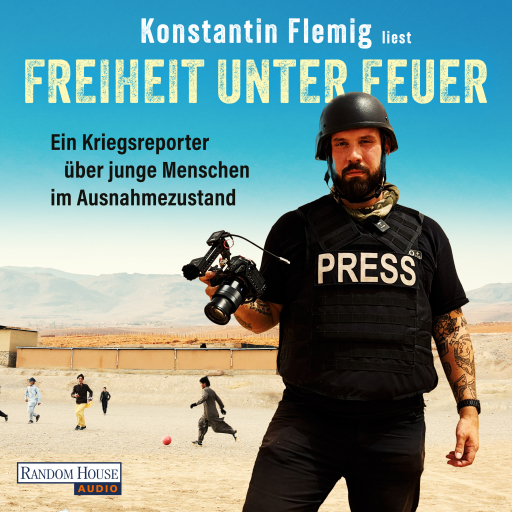
There is a book that belongs alongside what is happening in Kyiv this week: Freiheit unter Feuer (Freedom Under Fire) by war reporter Konstantin Flemig, who wrote about the unbearable difficulty of imagining war when you have only known peace. That difficulty, he argued, is not a failure of imagination. It is what peace does to you.
The festival runs until May 31. I don't know what that means, practically, in a city where the anti-aircraft alarms continue. I suspect the people attending know something I don't — about why you sit in a room with books and people who love books, even then. Especially then.