
Lord of the Flies Has Finally Found Its Television. The Boys Are Back on the Island.
The surprising thing about Lord of the Flies — William Golding's 1954 novel about a group of English schoolboys who descend into savagery after being stranded on a tropical island — is not that it took seven decades to reach television. The surprising thing is that anyone thought it needed to. The book has never left us. It sits in school curricula like a stubborn piece of furniture nobody has the heart to move.
And yet here we are. Netflix has launched its first television adaptation, written by Jack Thorne, premiering today. Lord of the Flies has been filmed twice — most memorably by Peter Brook in 1963, in grainy black-and-white with the texture of a fever dream — but never for the small screen. Thorne, who adapted Harry Potter for the stage with The Cursed Child, is perhaps an unexpected choice for this particular nightmare. He tends toward sentiment; Golding tended toward despair.
What makes Lord of the Flies so durable, so irresistible to adaptors, is its terrible clarity. Strip away civilisation — school uniforms, rules, the distant promise of rescue — and what emerges is not innocence corrupted but something that was always there: hierarchy, cruelty, the ritual violence of boys performing their idea of power. Golding, who served in the Royal Navy during the Second World War and watched what men did to each other, was not writing a children's book. He was writing a diagnosis.
The 2026 version arrives at a particular moment. We are not short of examples of what happens when structures collapse, when the conch is ignored, when the beast turns out to be less metaphor than description. Whether a streaming platform adaptation can carry that weight — or whether it will sand down Golding's bleakness into something more palatable for algorithm-optimised viewing — remains to be seen.
Golding won the Nobel Prize in 1983. In his acceptance speech, he said the book arose from his realisation that "man produces evil as a bee produces honey." Netflix, presumably, has other ideas about what the algorithm rewards.
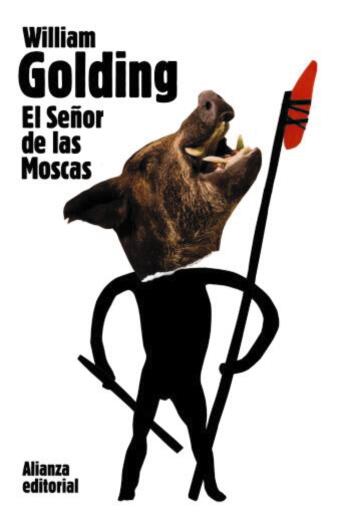
![El Señor de las Moscas [cómic]](https://storage-aws-production.publica.la/bookwire-direct-sales/issues/2025/12/r8q6w47IE83sAswH/9e40ef14-bb2f-4105-be11-89bde7da636f_cover.jpg)