The Irony of a Children’s Ambassador Who Thinks 94.7% of Children’s Books Are “Crud”
There is something to be said for a man who, upon being appointed the nation’s highest literary ambassador to children, immediately insults roughly 94.7% of the children’s books in existence. Whether that something is admirable or alarming probably depends on how you feel about hyperbole as a critical tool.
Mac Barnett — author of some of those children’s books, it should be noted — wrote in his essay collection Make Believe: On Telling Stories to Children that nearly all of the genre is crud. He was adapting Sturgeon’s Law: the science fiction critic’s observation that 90% of everything is crud. Barnett, ever the overachiever, bumped the number up a few percentage points for the picture book world.
The children’s literary community, it turns out, did not receive this as the intellectual provocation it may have been intended as. The problem was authority. As the Library of Congress’s current National Ambassador for Young People’s Literature, Barnett’s words didn’t land as bon mots from a witty essayist — they landed as policy from a figurehead. In an era when books for children are being challenged and removed from shelves at record rates, critics pointed out that “most kids’ books are crud” is not a neutral observation. It’s an endorsement, albeit inadvertently, of an existing narrative.
Tracey Baptiste was direct: such language from authority figures is “not just careless — it’s foreseeably harmful.” Afoma Eme-Umesi pointed to a historical pattern: when publishers or gatekeepers are asked to publish fewer books, the cuts reliably fall first on authors from marginalised communities. Kate Messner asked the obvious: who decides what quality looks like?
Barnett apologised. First acknowledging a “hyperbolic sentence,” then issuing a full statement: “the passage I wrote is hurtful.” He was wrong, he said. A petition circulated. Hundreds signed.
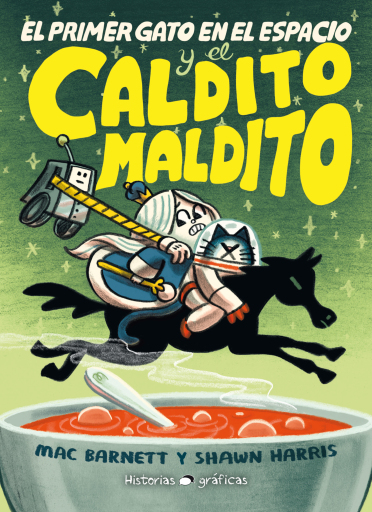
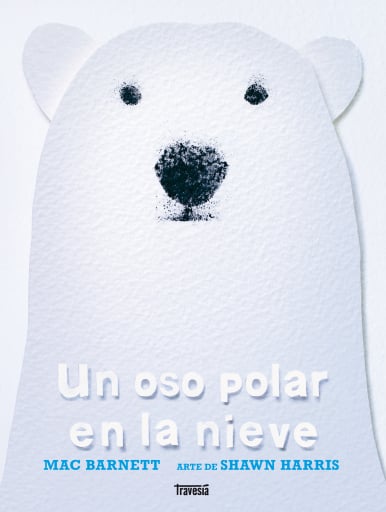
What’s oddly revealing about this episode is not the provocation itself, but what it exposed about the precariousness of children’s literature as a space. Picture books and middle-grade fiction sit at the centre of the fiercest ongoing cultural battles in American letters. Barnett knows this. His own Un oso polar en la nieve and El caldito maldito are gentle, witty books that would strike most readers as entirely harmless. The point is that “harmless” has become a contested designation.
Perhaps the truest version of Barnett’s provocation — stripped of the blunt statistic — is this: children deserve better books than adults typically offer them, and the system that produces those books could stand examination. That’s a reasonable argument. It just requires a more careful messenger. Or, at minimum, a smaller fraction.