Mahmoud Khalil to Publish Memoir in 2027 — the Book America's Government Didn't Want Written
The U.S. government detained Mahmoud Khalil in March 2026. He was, at the time, a lawful permanent resident, a Columbia University graduate student, and the most visible face of the campus pro-Palestinian movement. The charge? Technically, none. The mechanism was a rarely invoked statute permitting deportation of non-citizens deemed a threat to foreign policy. A federal judge blocked the deportation. The legal fight continued. And now, inevitably, there is a book.
Khalil's memoir is scheduled for 2027. No publisher has been announced yet, but the subject is already declared: his ICE detention, the courtroom battles, and what it means to be a Palestinian voice inside an American institution in the present political climate. One might observe that the story has already been written, in a sense — it played out live on social media, in federal courts, on newspaper front pages. What a memoir can offer that the news cycle cannot is time, precision, and the first-person account that no journalist can supply.
There is a predictable trajectory at work here — activist detained by government, memoir acquired by major publisher, prize shortlist to follow — but that pattern does not make Khalil's case less significant. What his arrest represented was the deployment of immigration machinery against political expression on a college campus. PEN America's latest Freedom to Write Index noted, with barely concealed alarm, that the United States appeared in its annual list for the first time in 2025, citing cases like Khalil's as the reason.
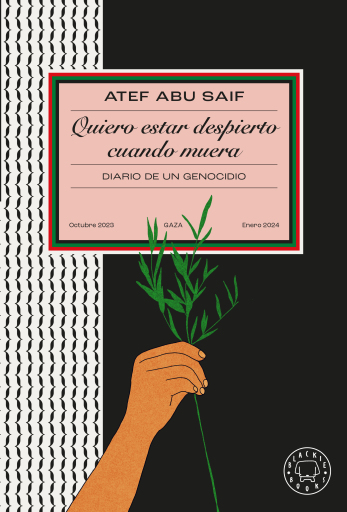
The useful comparison is Atef Abu Saif, Gaza's former culture minister, who kept a diary throughout the Israeli bombardment. That book — I Want to Be Awake When I Die — demonstrated what writing under threat looks like when it is done with discipline and clarity. Khalil was not in a war zone. But the chill of knowing that a government considered your words dangerous enough to warrant arrest is its own form of duress, and its own subject.
Whether the memoir will become the definitive account of this moment — or merely one voice in what will surely be a crowded conversation — depends on what Khalil actually says. He has until 2027 to decide. Which is, considering everything, a luxury he nearly didn't have.