Marjane Satrapi: Reading Her Name Was Already an Act of Resistance
I remember the first time someone left a copy of Persepolis on my desk without a word. I read it in one sitting, cross-legged on the floor, with the sensation that something in the world had quietly shifted back into place.
Marjane Satrapi died on June 4, 2026. She was 58. The cause of death has not yet been released, but what she leaves behind is unmistakable: a body of work that redefined what images can do when wielded by a woman unafraid of her own history.
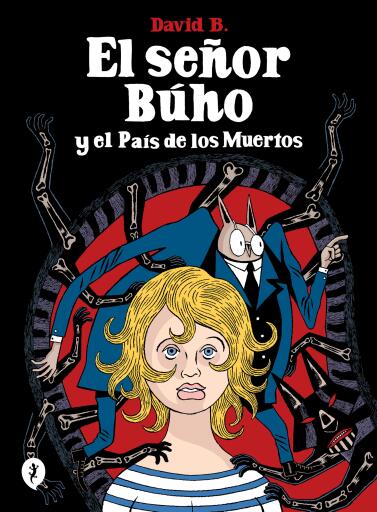
Satrapi was born in Rasht, Iran, in 1969. She grew up in Tehran during the Islamic Revolution, was sent to Vienna at fourteen, returned home, left again, and eventually settled in Paris. All that itinerant, fractured life became four graphic memoir volumes published between 2000 and 2003 — and then one of the most widely read books of the century. Persepolis is autobiography in panels: black ink, clean lines, a voice that is simultaneously a child's and a woman looking back without easy nostalgia. In Paris she found at L'Association a community that also turned life into art: it was there she discovered David B., whose dark, portentous mythology welcomed her like a sister.
What Satrapi achieved was improbable: making collective trauma intimate. She fit an entire revolution into the wide eyes of a ten-year-old putting on a veil for the first time. Where García Márquez made the extraordinary feel ordinary, Satrapi worked the other direction — she made the daily act of surviving feel astonishing.
In 2007 she co-directed an animated adaptation of Persepolis, which earned an Oscar nomination and the Jury Prize at Cannes. She went on to direct other films, including Radioactive (2019), on the life of Marie Curie. But she remained, at her core, someone who drew worlds to understand them.
Her last major project was editing Woman, Life, Freedom, a graphic nonfiction anthology responding to the death of Mahsa Amini in 2022 and the movement that followed. Satrapi knew that territory: decades spent explaining Iran to those who preferred simpler narratives, without exoticizing it, without softening it. In 2024 she refused France's Légion d'honneur, citing her adopted country's hypocritical stance on Iran.
She was, in every possible sense, someone who lived according to what she wrote. Persepolis changes how you read the world. If you haven't read it yet, now is the time. And if you have, perhaps this is the moment to return.