401 Writers Behind Bars: The World PEN America Has Been Counting All Along
I keep a small notebook on my desk — I have done this for years — in which I occasionally write down the names of writers I have been meaning to read. The list grows faster than I read through it, which is perhaps the way it should be. What I try not to think about too often is that another list exists somewhere, longer and more urgent: the names of writers who cannot write because they are in prison.
PEN America released its seventh annual Freedom to Write Index last week. The number for 2025 is 401 — writers imprisoned across 44 countries, up from 375 the year before. A seven percent increase. China accounts for 119 of those cases. Iran follows with 53.
The report documents something that anyone who pays close attention to literature and geopolitics has known for some time: that writing is a political act, and that governments treat it as such. The nations responsible for the largest increases this year — Iran, Israel, Russia — are also the nations most actively engaged in military conflict. Anti-war expression, dissenting speech, the documentation of violence: these are the categories of writing that get people jailed.
What distinguishes this year's report from the six that preceded it is a single sentence: the United States appeared in the index for the first time. The case involves Sami Hamdi, a British political commentator detained by Immigration and Customs Enforcement. There will be a temptation to note the distinction — ICE detention, not a literary prosecution — and move on. I think that would be a mistake. The infrastructure of detention is not separate from the culture of speech suppression. It is part of it.
I think of the Russian literary tradition — Akhmatova, Mandelstam, Brodsky, each pushed toward silence in a different way — and how that tradition is being tested again. Knausgård once wrote that we write to be understood by someone we have not yet met. What happens to that hope when the meeting can never take place?
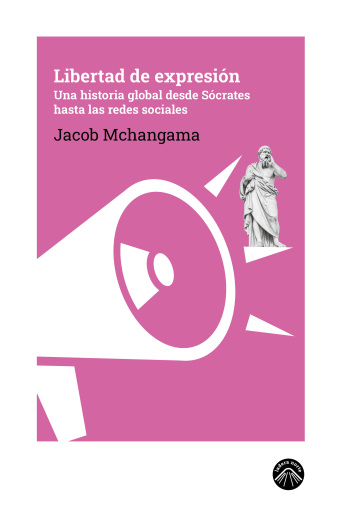
PEN America's index is, among other things, a reminder that the freedom to read — the comfortable freedom of those who write about books for pleasure — rests on something that is never quite as stable as it appears. Every library presupposes writers who were free to fill it. Not everyone is. You can start with 1984, Orwell's still-harrowing argument about what language becomes when power controls it, or with Jacob Mchangama's Free Speech: A History from Socrates to Social Media, a meticulous tracing of how this particular freedom has been won and lost across centuries.