Two Americas, Two Books, One Industry That Cannot Say No
Ted Cruz is writing a biography of Clarence Thomas. Tim Walz, the former governor of Minnesota and last year's Democratic vice-presidential candidate, is writing a memoir about his state's resistance to federal immigration enforcement. These two facts share nothing except the fact that, eventually, they will share a shelf.
The political memoir is, at this point, a genre so crowded it barely qualifies as literature. It is more accurately described as an extension of the campaign trail by other means: a way for politicians to frame their legacies, explain their choices, settle their scores, and remind voters they still exist. Every major crisis in American public life eventually produces a wave of books. The timing is never accidental.
What is interesting about the Cruz-Thomas pairing is its biographic ambition. Cruz is positioning himself not as memoirist but as chronicler — someone who looks at another man's life and finds in it the contours of an argument. This is, historically, a more difficult task. Great biography requires something close to empathy, which is not always the first quality one associates with a sitting senator from Texas.
Walz's approach is simpler and perhaps more honest: this is a man who governed through conflict and wants to explain himself. Political memoirs that emerge from defeat tend to be more interesting than those that emerge from triumph — the need to explain rather than celebrate has a way of producing better sentences. Whether Walz's book will be good is unknowable. Whether it will be read by anyone outside Minnesota is the more pertinent question.
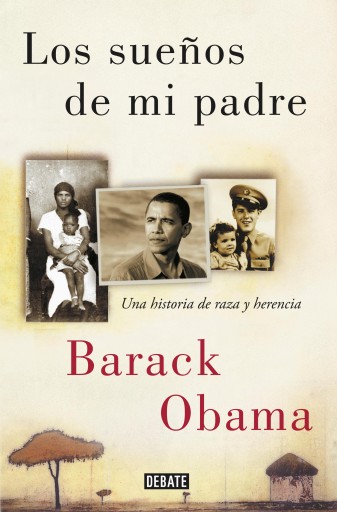
One thinks, inevitably, of the books that have survived the category. Barack Obama's Dreams from My Father — written before he was president, when he had nothing to sell — stands alone among modern political memoirs precisely because it was not written by a politician but by someone who happened to become one. That difference is not small.
The real question is not whether Cruz's biography or Walz's memoir will be any good. It is what it means that American publishing, still bruised from years of contraction, continues to offer advances to people whose chief qualification is that they once ran for something. Perhaps that is, in its own way, a form of democracy. Or perhaps, as Dickens might have noted, it is simply commerce with better cover design.