The Pope, Gandalf, and the Machines: Leo XIV's Unlikely Literary Manifesto
There is a tradition, in certain corners of the internet, of citing Tolkien as though he wrote a self-help guide. You find him on motivational posters, in Reddit threads about perseverance, in the sort of speech delivered at corporate retreats. Pope Leo XIV has now, somewhat magnificently, broken new ground by deploying the Fellowship against artificial intelligence.
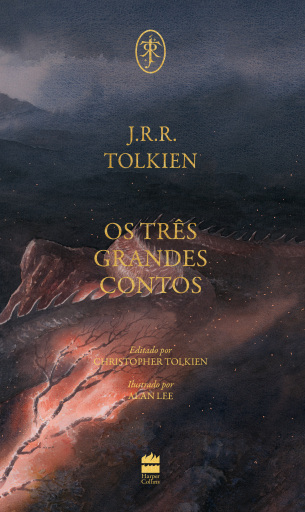
The quote the Pope chose comes from Gandalf in The Return of the King: «It is not our part to master all the tides of the world, but to do what is in us for the succour of those years wherein we are set.» He used it to argue that humanity should focus on what it can actually control — local, humane, just responses to AI — rather than attempting to govern the entire technological storm from above.
This is, it turns out, rather good advice. And it is interesting advice to come from a pope, who presumably has access to rather more elevated quotations. Leo XIV's encyclical is concerned with something straightforward but important: the risk that AI, when deployed by private corporations with resources that «surpass those of many governments,» will create new forms of exclusion — in employment decisions, in access to credit, in public services — where automated systems, by their nature, cannot distinguish between data and a person.
What Tolkien adds to this is not strategy. Gandalf is not a management consultant. What he adds is the awareness that you are inside a story larger than yourself, and that this has implications for how you behave. You don't master the tide. You do what the moment requires of you, where you stand. There is a difference — the Pope seems to feel, and Tolkien certainly did — between controlling the future and responding, with conscience, to the present.
It would be easy to laugh this off: a centuries-old institution invoking a twentieth-century fantasy author to address a twenty-first-century technology problem. But Tolkien wrote that passage in the long shadow of the Second World War. Gandalf says it to characters who are exhausted and uncertain whether anything they do can matter. The Pope is suggesting, perhaps, that we are in a similar position. The document also warns explicitly against a «robotic future» and the concentration of technological power in private hands.
Whether or not one agrees with the encyclical's politics, the literary instinct is sound. The best writers — Tolkien among them — have always been concerned with what it means to act rightly when the forces at work are too large to understand. Which is, more or less, exactly where we are.