Locus Awards 2026: Okorafor, Harrow, El-Mohtar, and a Year That Won't Quit
Quick question: when did the Locus Awards last force you to make a shopping list? Because the 2026 edition, announced at the Bay Area Book Festival, is exactly that kind of announcement.
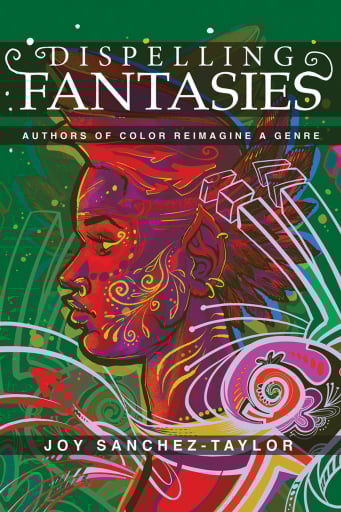
Nnedi Okorafor wins the Science Fiction Novel category for Death of the Author, a book that had already won an NAACP Image Award and a Libby Award. Not a surprise, then — a confirmation. Okorafor has spent years building worlds where African science fiction isn't an exotic curiosity but the gravitational center of speculative fiction. For critical context on her work, Dispelling Fantasies by Joy Sanchez-Taylor analyzes how writers like Okorafor, Jemisin, and Kuang are reconfiguring the genre from within.
Alix E. Harrow wins Fantasy Novel for The Everlasting. There's something I love about Harrow: she writes as though genre were a door you can kick open when it's closed and stroke when it's open. Amal El-Mohtar — who has one of those names that sounds like a book title — wins the Novella with The River Has Roots. El-Mohtar is also half of the duo behind This Is How You Lose the Time War, which if you haven't read, well. You know what you have to do.
In Horror, Stephen Graham Jones wins for The Buffalo Hunter Hunter. Jones previously won for My Heart Is a Chainsaw — which says something about the man's consistency. First Novel goes to Natalia Theodoridou for Sour Cherry. And the Translated Novel category goes to On the Calculation of Volume: Book III by Solvej Balle, translated by Sophia Hersi Smith and Jennifer Russell. Balle is writing a series about repeating time — the same day, over and over, with variations — something Borges-adjacent but entirely its own strange splendor.
What makes the Locus Awards special isn't the money or the ceremony. It's the vote: science fiction and fantasy fans vote directly. One of the few literary prizes where the canon isn't decided by four academics in a room — it's decided by the people who actually read these books. That feels deeply right and slightly chaotic, which is exactly how speculative fiction should be.
2026 is, frankly, a brutal year for speculative fiction. And it's only June.