
Project Hail Mary: How a Hard Sci-Fi Novel Conquered the World

Let's start with an uncomfortable question: how many people who say they love Project Hail Mary know what infrared spectroscopy is? How many could explain the Petrova line without Googling it? And how many — let's be honest — bought the book because they saw Ryan Gosling was starring in the movie?
That last answer shouldn't embarrass anyone. Because if Project Hail Mary proves anything, it's that the border between "serious culture" and "popular culture" is, at best, a convenient fiction. Andy Weir wrote a novel with real thermodynamics equations, a propulsion system based on speculative biology, and an alien who communicates through musical chords. And people devoured it. Not the usual hard science fiction fans — they were already sold since The Martian. People. Your cousin who reads contemporary romance. Your coworker who hasn't finished a book since college. The person on the subway with a Kindle who stares into space and suddenly laughs alone.
How did this happen? Let's rewind. Andy Weir published The Martian in 2011 as a self-published serial on his blog, chapter by chapter, because no publisher wanted it. It became a bestseller. Matt Damon did the movie. Suddenly, Weir was the writer who had proven that hard science fiction could be entertaining, accessible, and — above all — profitable. Project Hail Mary, published in 2021, took that formula one step further. It didn't just entertain — it moved people. Rocky, the spider-shaped alien who can't see but says "Friend!" with the same energy as a golden retriever, became the most beloved character in recent fiction.
And here's where it gets culturally interesting. Rocky wasn't designed to be a meme. Weir built him with obsessive scientific rigor: ammonia biology, communication through sound frequencies, an exoskeleton that operates at 200 degrees Celsius. But the internet did what the internet does best: made him adorable. Fan art flooded Twitter and Tumblr. Cosplays showed up at conventions. Someone created a TikTok account where Rocky "reacts" to everyday situations with his musical tones. The meme "Is friend, is friend?" became a global inside joke among readers who probably don't overlap on any other book.
This isn't trivial. For decades, hard science fiction was the intellectual ghetto of genre literature. It was "what engineers read." It had a reputation for being cold, technical, uninterested in human emotions. And partly that was true — not all of it, but much classic hard SF prioritized ideas over characters. Weir broke that pattern without betraying the genre. He didn't simplify the science. He didn't cut the equations. What he did was put them in service of something anyone can understand: the desperation of being alone and the irrational joy of finding someone.
The film adaptation starring Ryan Gosling, directed by Phil Lord and Christopher Miller — yes, the ones behind The Lego Movie and Spider-Verse — is another fascinating chapter. Gosling isn't the obvious choice for a shy science nerd. But that's exactly the point. Casting Gosling is a statement: this isn't niche, this is for everyone. The same strategy that turned 2001: A Space Odyssey into a cultural event when Kubrick brought it to screen, or that made Orson Welles' War of the Worlds broadcast a moment that redefined the relationship between fiction and audience.
And what does all this say about where culture is heading? Something important, I think. The success of Project Hail Mary, like Martha Wells' Murderbot Diaries or shows like Severance and Andor, suggests we're at a moment where audiences don't want things dumbed down. They want complexity, but with heart. They want to hear how the ship's engine works, but they also want to cry when the alien says goodbye.
Weir didn't invent this. But he crystallized it at the perfect moment. Project Hail Mary is a hard science fiction book that works as a cosmic buddy movie, reads like a thriller, and feels like a love letter to human curiosity. It is, in short, proof that the categories we use to classify culture — "high" and "low," "serious" and "popular," "for nerds" and "for general audiences" — are far less useful than we think.
Do you need to know what infrared spectroscopy is to enjoy this book? No. Will you want to know after reading it? Probably yes. And that, dear reader, is the best magic trick literature can pull off.
Recommended reads
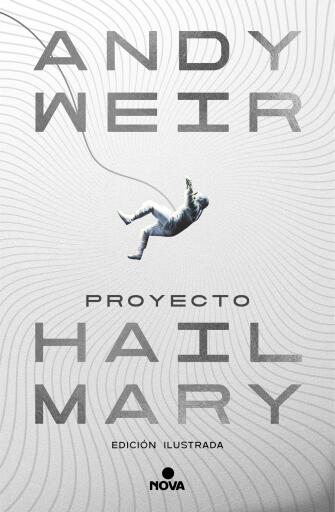
La edición ilustrada del fenómeno de Andy Weir que conquistó a millones de lectores.
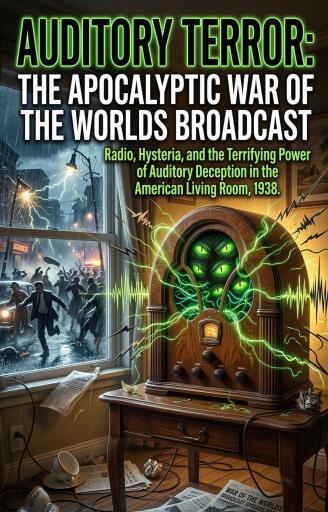
Cuando la ciencia ficción saltó de las páginas y aterrorizó a un país entero por radio.
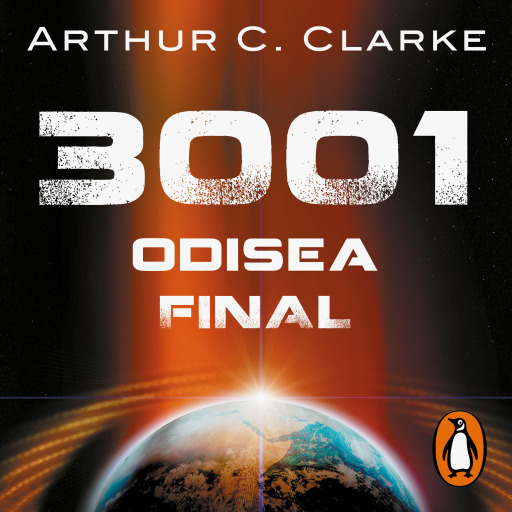
El cierre de la saga que definió la ciencia ficción para generaciones enteras.

El robot con ansiedad social favorito de internet: prueba de que la sci-fi ya no es nicho.