At the Breaking Point: What Five Years of Censorship Has Done to Queer Literature
I remember when I first came to Madrid from Copenhagen, nearly twelve years ago, and spent weeks in a particular bookshop on Calle de las Huertas where the literature section had a small, unlabeled shelf of queer fiction tucked between travel writing and poetry. It wasn't hidden, exactly. But it was arranged with a kind of apologetic discretion, as though the books had been placed there with the hope that no one would notice them too loudly.
That shelf is gone now. In its place — and in many of the better bookshops — there are entire sections. Prominent, well-lit, organized by genre and language. I had thought this meant something stable. A recent piece in Book Riot by Danika Ellis suggests otherwise. The headline: "Queer Books and Authors are at a Breaking Point."
Ellis documents five years of escalating censorship targeting LGBTQ content — not as a series of isolated incidents but as a coordinated, cumulative campaign that has now reached into every layer of the publishing ecosystem. Authors. Agents. Publishers. Bookshops. The pressure doesn't arrive as a single crisis; it arrives as attrition. Each challenge, each removal, each school board vote is manageable in isolation. Together, they constitute something harder to name and harder to resist.
The Nordic countries have lived with this particular tension differently. I grew up reading Tove Jansson — whose intimate partnership with the artist Tuulikki Pietilä was never a secret but was simply never made into a subject of public controversy either — and I internalized an idea of queer existence as something unremarkable, present in the stories I loved without needing to be announced. That is not, I should note, the same as saying it was accepted. It means it existed quietly, which is a different kind of condition entirely.
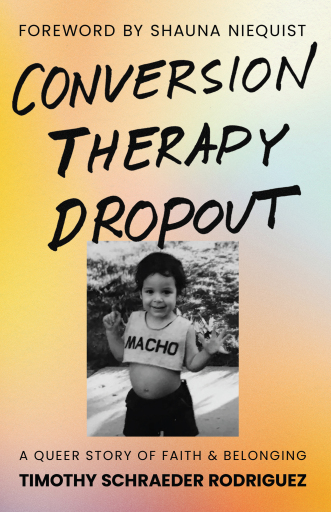
What makes Ellis's argument worth sitting with is not the statistics but the word she chooses: breaking. Not broken. Not threatened. Breaking — present continuous, still in motion. Conversion Therapy Dropout by Timothy Schraeder Rodriguez, a memoir of eight years inside evangelical conversion therapy, is one of the kinds of books this pressure is designed to make invisible. Play Proud by Rob Sanders, a children's book celebrating sixty queer athletes, is another kind entirely — quieter in register, aimed at readers who are still forming their sense of what the world contains.
Both represent what a breaking point means in practice: not the absence of books, but the exhaustion of the people who write them, publish them, sell them, and defend them. The books themselves are still here. The question that lingers, after reading Ellis, is for how much longer the people around them can sustain the weight.