Sally Rooney Finds a Way: Intermezzo to Reach Hebrew Readers Through a BDS-Aligned Publisher
Some books spend months in the "when I get to it" pile before a piece of news forces you to pull them down and remember why you bought them. That happened to me this week with Intermezzo, Sally Rooney's latest novel, when it was confirmed that the Hebrew translation will be published by November Books — an independent Israeli publisher that actively supports Palestinian rights under UN-defined standards.
I had been waiting for this moment since 2021. When Rooney declined to publish Beautiful World, Where Are You with a major Israeli house, the literary world held a low murmur of anticipation: would she ever make it into Hebrew? The Irish writer had always said yes — she would publish in Hebrew the moment a compatible publisher appeared. And here that publisher is: November Books, which works alongside +972 Magazine and Local Call, two Israeli publications that advocate for Palestinian rights.
What strikes me as beautiful — and politically important — is that Rooney hasn't shut the door on Israeli readers. She's waited until she could reach them in a way that doesn't betray what she believes. Ishai Menuchin, director of November Books, said it plainly: "First and foremost, Intermezzo is an outstanding novel that deserves to be available to Hebrew readers." The book hasn't been taken hostage by politics. Politics had to adapt to the book.
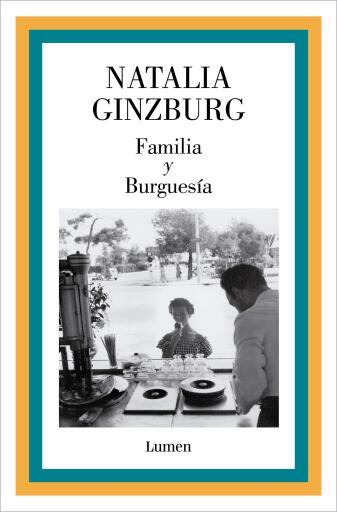
Intermezzo — which explores grief, fraternal rivalry, and love as a form of survival — carries the emotional weight you sometimes only find in certain strands of European fiction. Rooney writes with an economy of means that calls to mind the great Italian masters: every sentence holds more than it lets on. Familia y Burguesía by Natalia Ginzburg — cited as a touchstone for writers like Rooney herself, Elena Ferrante, and Zadie Smith — trains your eye to recognize truly precise prose. As does Las palabras de la noche, which Italo Calvino considered Ginzburg's finest novel.
What I admire most about this decision is that it isn't an empty gesture. Publishing with a small, politically committed independent press has real consequences: less distribution, less visibility, probably fewer sales. But also more coherence. And at a moment when the literary world navigates between the contradictions of the global market and the ethical responsibilities of those who make culture, that coherence counts for something.
Israeli readers who want Rooney can now have her in their language. And Rooney can say she reached them without surrendering what she believes. The publishing world rarely allows for this kind of solution. This week, it did.