Sally Rooney Brings Intermezzo to Hebrew — Through the Publisher She Chose
Sally Rooney, the Irish writer who turned desire and political ambivalence into first-rate fiction, has announced that her novel Intermezzo will be published in Hebrew through November Books — an independent Israeli publisher whose principles align with the BDS movement. This is not a minor detail. It is, in some sense, the public resolution of a tension that has followed her for years.
In 2021, when Beautiful World, Where Are You was released, Rooney declined to work with Israeli publisher Modan — which had released her earlier novels — on grounds of political conscience. The decision made her a target for both attacks and admiration. Those who criticised her reached for accusations of antisemitism with a carelessness that erased all distinction between state, government, and people. Those who supported her saw a writer willing to bear the consequences of her convictions. Both readings simplified something harder: holding a coherent institutional position when the media noise demands you abandon it.
November Books is exactly that coherence in action. The publisher collaborates with +972 Magazine and Local Call, two independent Israeli outlets that support "the comprehensive, UN-stipulated rights of the Palestinian people" and oppose "military occupation and apartheid." Ishai Menuchin, November's director, was direct: "Intermezzo is an outstanding novel that deserves to be available to Hebrew readers." Readers in Israel can preorder through a crowdfunding platform.
Because Intermezzo is, above all, exactly that: a novel about two brothers confronting grief, love, and the difficulty of connecting in a world that rewards disconnection. A story that deserves to be read in whatever language it reaches.
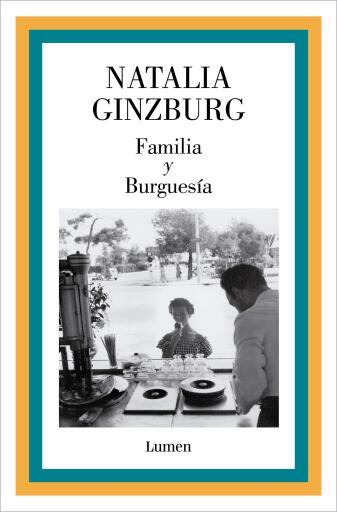
Natalia Ginzburg — whose Famiglia e Borghesia shaped writers like Rooney — once wrote that writing well demands not lying to yourself. Perhaps the same honesty Rooney brings to her characters is what guides her decisions outside the fiction.
I don't know whether Rooney is a heroine or a symbol, and I suspect she doesn't want to be either. What I know is that the next time I open Intermezzo — that novel where chess and grief interlock with a precision that took my breath — I'll think about the care with which someone chose which door to open.