'Taiwan Travelogue' Wins the 2026 International Booker: A First for Mandarin Chinese Fiction
Some news arrives like a gentle wake-up call. Last week, at Tate Modern in London, the judges of the 2026 International Booker Prize announced the winner, and the literary world paused for a moment. Taiwan Travelogue — a novel by Taiwanese writer Yáng Shuāng-zǐ, translated into English by Lin King — has become the first book written in Mandarin Chinese to win the International Booker. That is not a small thing.
The novel takes the form of a fictional translation of a rediscovered Japanese travel memoir: a culinary and emotional journey through 1930s Taiwan under Japanese colonial rule. The chair of the judging panel, Natasha Brown, described it as «a captivating, slyly sophisticated novel that succeeds as both a romance and an incisive postcolonial novel». Two women, two languages, two eras: the story it tells is how love and identity survive even when the occupier's language is imposed on you.
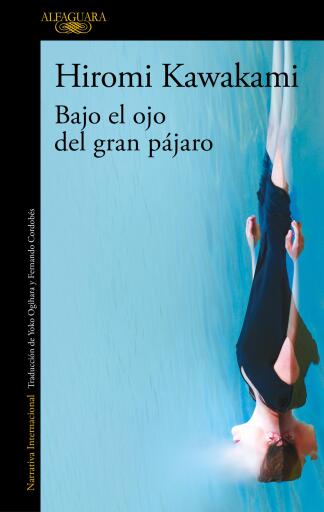
I think of all the books I've read that travel between languages — books that are themselves a translation of the world — and I understand why this matters so much. Translator Lin King shares the £50,000 prize with the author: in 2024, her English version had already won the National Book Award for Translated Literature. A translator is not the ghost of a book; they are also its architect. Hiromi Kawakami, the Japanese author who was shortlisted for the 2025 International Booker with Under the Eye of the Big Bird, knows this well: Asian literature is reaching shelves worldwide in ways that can no longer be ignored.
The International Booker has grown steadily more open to non-Anglophone voices. Eva Baltasar, the Catalan writer, reached the final in 2023 with Boulder, a novel so physical and visceral you can almost touch it. She didn't win that year, but her presence on the list changed something in how Europe sees itself. Taiwan Travelogue delivers another jolt: not only does it change the language — the first Mandarin Chinese novel to win — it also shifts the geography of the literary canon.
What does this mean for readers? That there is a book waiting to be found. That Yáng Shuāng-zǐ deserves a place on nightstands everywhere, alongside Lispector and Ferrante, among those writers who wrote in one language and changed all the others. Start looking for it.