Thomas Pynchon Returns from the Shadows: Thirteen Years Later, 'A oscuras' Breaks the Silence
There are writers who don't need to speak for the world to listen. For more than six decades, Thomas Pynchon has built that silence as an integral part of his work: no interviews granted, no recognizable photographs, no public appearances. Just the books — dense, labyrinthine — speaking in his place.
And now, thirteen years after Bleeding Edge — the last time he published a novel — Thomas Pynchon returns with A oscuras. The novel's opening appeared this week in El Cultural, and if the beginning says anything about the whole, what approaches is another Pynchon: dark, protean, impossible to reduce to a summary without losing half of what matters.
I remember the first time I tried to read Gravity's Rainbow. I was twenty-two, living in Bogotá, and someone had given it to me with the warning that it was "difficult." Difficult wasn't quite the word. It was like trying to drink a river. The systemic paranoia, the characters who appear and vanish like radio signals, the black humor woven through existential terror. It took me three attempts to finish it. And when I did, I couldn't quite explain what I had read — but I knew something had changed in the way I saw the world.
A oscuras promises to continue that tradition of joyful difficulty. The title itself is a manifesto: in the dark, without light, feeling one's way forward. Pynchon has spent his career exploring how we live inside systems we don't fully understand — political, technological, emotional — and that project remains, perhaps now more than ever, entirely urgent. The novel arrives at a moment when disinformation, surveillance, and the collapse of shared meaning make his obsessions look more prophetic than eccentric.
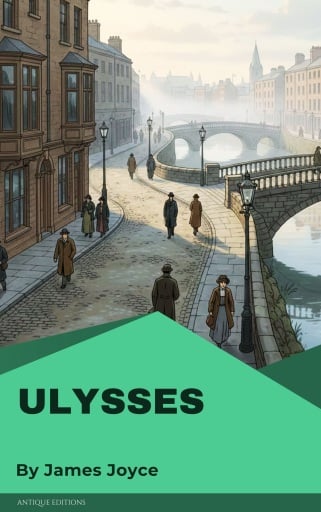
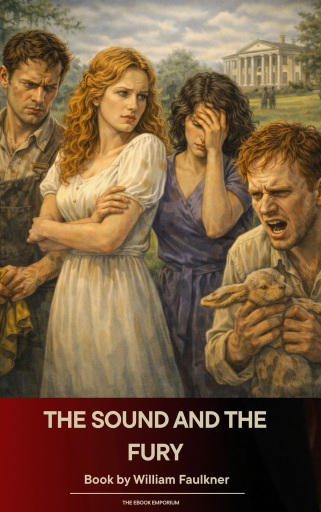
That he continues to publish, in his eighties, is itself an event. Literature needs its impossible figures: those who refuse to surrender to the logic of the publishing market, to constant self-promotion, to the endless cycle of interviews and social media. Pynchon stands as proof that the work can speak for itself. As Joyce proved with Ulysses, and Faulkner with The Sound and the Fury: some books demand everything from their reader, and for precisely that reason, change something in them forever.
A oscuras has just arrived and is already news. Soon we'll know if it delivers what its arrival promises. Until then, there is only one task: to read.