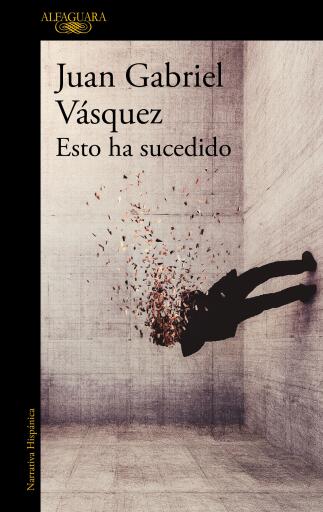
Esto ha sucedido: Juan Gabriel Vásquez Gathers a Decade of Watching the World
There is a particular kind of intelligence that reveals itself only in columns. Not in novels, where time permits every nuance, every echo — but in the compressed form of the weekly deadline, the five hundred words that must carry the weight of a moment. Juan Gabriel Vásquez, Colombia’s most precise literary observer, has spent a decade producing exactly this kind of intelligence for El País. Alfaguara has now gathered those columns into Esto ha sucedido, and the result is something rare: a collection that reads like a sustained meditation rather than an archive of opinions.
The Italian novelist Andrea Bajani has called Vásquez “one of the greatest writers in the world.” His novels — The Noise of Things Falling, The Informers, The Shape of the Ruins — are archaeological excavations of Colombian memory, patient and precise. His columns are the same intelligence applied to the present tense: observations that feel immediate when written and accumulate into something deeper when read together.
What distinguishes a literary columnist from a talented opinion writer is the same thing that distinguishes a short story from a news report: not the information conveyed, but what the form does to the reader. Vásquez’s columns work like miniature narratives. They build toward something — an image, an observation, a shift in perspective — and they stay with you after the page is turned. That is not a common gift.
Alfaguara’s edition invites what the original publication did not allow: the long view. Read in succession, the columns reveal a writer processing a decade of global and Colombian upheaval with the patience of someone who knows that understanding takes time. There is no punditry here. There is attention, and there is craft.
For readers who have not yet encountered Vásquez’s fiction, this is a gentle introduction to one of literature’s most disciplined minds. For those who know the novels, it is something else: the workshop left open, the thinking made visible.