Vila-Matas Wins the Premio Zenda de Honor and Literature Gets a Little Stranger
Let's ask the obvious question: how many living writers have managed to make the act of not writing their masterpiece? Enrique Vila-Matas did it in Bartleby & Co. How many have built an entire novel around the illness of literature? Also Vila-Matas, in Montano's Malady. And how many have just won the Premio Zenda de Honor for the 2024-2025 cycle and completely deserved it? The list is getting shorter.
Vila-Matas has spent decades building a body of work that doesn't fit into normal categories: not an essay, though it reads like one; not a novel, though it's shelved as one; not an autobiography, though it uses his name. His books are reading machines — artifacts that make you want to sprint for Perec, Pessoa, Melville, Robert Walser — always Robert Walser — while you're still reading them.
What Vila-Matas does, and this is what genuinely excites me, is treat literature as an infinite conversation you can enter at any angle and any time. His pages are full of real and invented writers who blur together until the distinction stops mattering. Postmodernism? Sure. Also something harder to name — a love of books pushed past the point of no return.
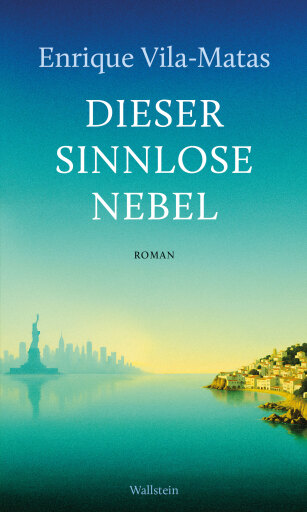
In our catalog you can find Dieser sinnlose Nebel, one of his available titles. I'll admit the German title fits him somehow — Vila-Matas has always worked in fog, the fog of the half-known, the barely-intuited.
Vila-Matas is 76 and remains more curious and more willing to take risks than most writers of 30. Have you read him? If not, start anywhere. If you have, you already know: you're going to want to start again.