Giving Faces Back to the Dead: Margaryta Yakovenko's War Chronicle
Some books don't ask to be read. They demand it. They grip you in the middle of the night and won't let go until you've finished — and even then you feel the weight of their words pressing against your chest. Ocupación, the new chronicle by Ukrainian journalist and writer Margaryta Yakovenko, published in Spain this spring, is precisely that kind of book: urgent, necessary, and uncomfortable in the most honest way.
Yakovenko has spent four years documenting the war Russia unleashed on her country. Not from the antiseptic distance of the correspondent dispatching from a hotel, but from inside: family chronicle, testimony from those who lose neighbors, parents, entire cities. Her guiding sentence fits in a tweet but weighs like stone: "It is important to put faces to the dead of wars." That is what Ocupación does, page after page — restoring faces, names, and specific histories to what the news turns into statistics.
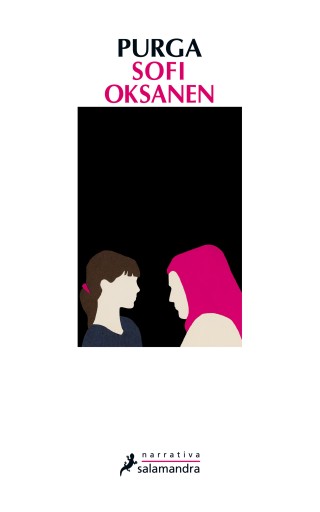
I remember the first time I read Sofi Oksanen and felt that literature could do something journalism cannot: inhabit the skin of those enduring occupation, not merely report it. Purga struck me like a blow of reality dressed as fiction, transforming Soviet-occupied Estonia into a collective wound. Something similar happens with Ocupación, though Yakovenko chooses the barer register of chronicle. The anger is there. The despair too. But most of all there is precision — the detail that rescues from oblivion.
The book arrives at a moment when the world seems ready to normalize horror. Four years of war, and information fatigue threatens to erase what should never be forgotten. Yakovenko writes from that awareness: that to narrate is already an act of resistance, that every story recovered is a small victory against the silence aggressors prefer. In El parque de los perros, Oksanen revisits those territories of family memory and intergenerational trauma. Yakovenko does something similar for Ukraine: she rescues the everyday — a family photograph, an interrupted conversation, a neighborhood that no longer exists — and turns it into living archive.
This is not an easy book, and it shouldn't be. What I can promise is that when you finish, the dead of this conflict will no longer be a number in the evening news. They will have had faces. And that, in these times, is already a political act.
In Dos veces en el mismo río, Oksanen explored the impossibility of escaping a historical occupation that refuses to stay in the past. Yakovenko tells us that past is still being made — in real time — and it depends on us, as readers and witnesses, not to look away.