Yasmin Zaher's Second Novel: A Palestinian Journalist Gets a Platform
Some books rearrange you from the inside. Yasmin Zaher's debut The Coin (Riverhead, 2024) did that to me: a spare, hypnotic novel about a Palestinian woman teaching in a New York school, her near-clinical obsession with cleanliness — the white gloves, the feel of tiles, the touch of things — and within that narrowness, everything: displacement, suspended identity, a body in foreign territory. I finished it past midnight, certain I had spent hours inside an extraordinary mind.
So the news lands as confirmation. Riverhead Books has acquired Zaher's second novel, this time centered on a Palestinian journalist. Details are thin. But that is enough to wonder what kind of book will emerge from this combination — a writer with scalpel-sharp prose and a protagonist who reports, who observes, who translates reality into words with urgent purpose.
Journalism and literature have never been truly separate. García Márquez worked as a chronicler for years before the imaginary Macondo overran all his notebooks. Kapuściński spent decades in African and Asian conflicts before transforming that experience into something that was neither quite reportage nor quite fiction, but both at once. A Palestinian journalist, placed anywhere in 2026 by Zaher, carries a gaze trained on urgency and injustice. In her hands, that gaze becomes literature.
What strikes me is not only the contract, though that matters too. Riverhead — the imprint that published Han Kang's The Vegetarian before anyone knew her name, the same house that backed Mohsin Hamid writing about Pakistani diaspora — knows how to recognize a voice. It knows there are readers waiting for books that do not dilute history, that do not soften pain into decorative metaphor. A novel about a Palestinian journalist is a novel about the reality of our time.
There are books that change you not by teaching something new but by confirming what you already sensed: that fiction can go where journalism cannot. It can inhabit the body of a woman who looks and writes from an impossible place, and make that impossibility feel personal.
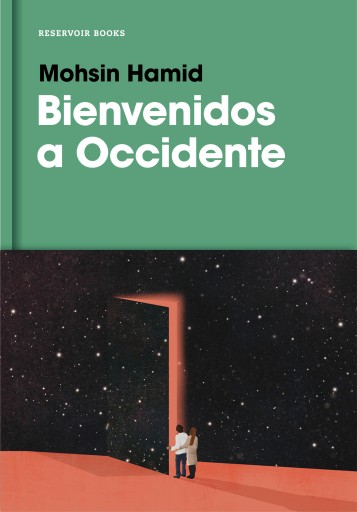
While we wait for Zaher's second novel, it is worth reading the diaspora writers who have been telling the world from its edges for decades. Teju Cole's Open City is one of the most singular books about what it means to walk through a city that is not yours. Mohsin Hamid's Exit West turned migration into a portal — literally — through which characters cross borders in impossible and beautiful ways. And in The Reluctant Fundamentalist, he had already shown how a Muslim identity in America can become a sustained monologue, a confession, an indictment.
Zaher belongs to that tradition. Her second novel, when it arrives, will be another of those books that shifts the ground.