Zadie Smith Reads Mostly Women. The Interesting Part Is Why That's Still News.
S
Sigrid Nørgaard
·
3 min read
There is a particular moment, reading the Nordic modernists — Hamsun, Undset, Lagerlöf — when you begin to notice something you cannot quite name. The women are there, but they are not quite at the centre, even when the story suggests they should be. The literary canon has a way of arranging itself around a particular axis, and you keep waiting for the shift.
Zadie Smith told an audience recently that she reads mostly women. The context was not reported in detail; the statement was brief enough to fit into Kirkus's "Seen & Heard" column. And yet it stayed with me in a way that brief statements sometimes do, precisely because of its casualness.
She is, of course, under no obligation to explain herself. But consider what it would mean to approach the library the way Smith apparently does — not as a curated monument to universal literary achievement, but as a space with corners and absences and accumulated choices. To read mostly women is not the same as reading only women, or reading against men, or making a political programme out of the act of reading. It is, simply, a decision to notice that the world of books is larger than the part of it that tends to receive the most light.
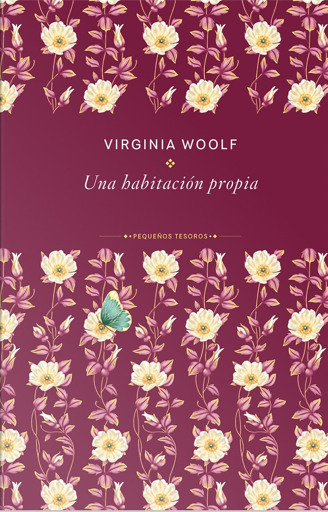
Virginia Woolf understood this in 1929, when she described how difficult it was for a woman to write without money and a room of her own. A Room of One's Own did not simply make an argument about material conditions — it mapped the shape of a silence. A century later, Woolf's essay has become such a fixture that it risks becoming decoration: a quote on a tote bag, a syllabus entry, something people cite to prove they already know.
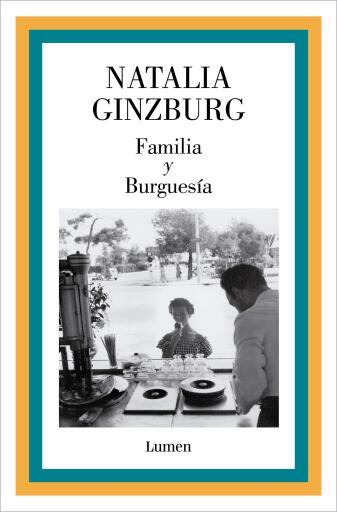
What Smith's remark does, I think — if we allow it to — is return the argument to its most practical dimension. Not: should women writers be represented in the canon? (They should, and they are, more than before.) But: do you, as an actual reader, know what you have been missing? The Italian novelist Natalia Ginzburg — whose Familia y Burguesía has quietly influenced a generation of writers including Smith herself, alongside Ferrante and Rooney — spent decades at a publisher's desk while writing her own quietly devastating fiction. She is described now as essential. For much of her career, she was simply present.
There is no satisfying resolution to this kind of observation. Reading mostly women does not correct a historical imbalance; it is not meant to. It is, perhaps, a way of paying attention — deliberately, without apology — to the parts of the library that were always there, waiting, unremarkably available.
What would your reading life look like if you counted, for one year, what you actually read — and then looked at the numbers?
Also on our shelves