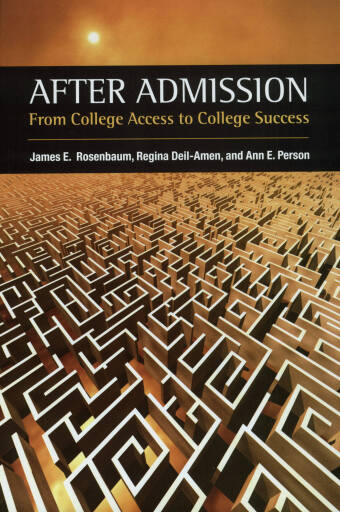
After Admission
By Rosenbaum, James E., Deil-Amen, Regina, Person, Ann E.
Published by Russell Sage Foundation
English
2007
ISBN 9781610444781
eBook
Buy at Association of University Presses - Tienda FILUNI
🇺🇸
Catademic
🇺🇸
Visit store →
Bajalibros Latam
🇺🇸
Visit store →
Association of University Presses - Tienda FILUNI
🇺🇸
Visit store →

Ebooks Librería Antártica
🇨🇱
Visit store →
Ebooks Agustin
🇪🇸
Visit store →
Bajalibros Argentina
🇦🇷
Visit store →

Sanborns Ebooks
🇲🇽
Visit store →
ebooks Libreria del GAM
🇨🇱
Visit store →
Bookshop Uruguay
🇺🇾
Visit store →

ebookskitapenas
🇬🇹
Visit store →
Ebooks Yenny - El Ateneo
🇦🇷
Visit store →
Crisol Ebooks
🇵🇪
Visit store →
Available at 12 bookshops
Catademic
🇺🇸
Visit store →
Association of University Presses - Tienda FILUNI
🇺🇸
Visit store →
Ebooks Librería Antártica
🇨🇱
Visit store →
Ebooks Agustin
🇪🇸
Visit store →
Sanborns Ebooks
🇲🇽
Visit store →
ebooks Libreria del GAM
🇨🇱
Visit store →
ebookskitapenas
🇬🇹
Visit store →
Ebooks Yenny - El Ateneo
🇦🇷
Visit store →
Crisol Ebooks
🇵🇪
Visit store →
About this book
<div>Enrollment at America's community colleges has exploded in recent years, with five times as many entering students today as in 1965. However, most community college students do not graduate; many earn no credits and may leave school with no more advantages in the labor market than if they had never attended. Experts disagree over the reason for community colleges' mixed record. Is it that the students in these schools are under-prepared and ill-equipped for the academic rigors of college? Are the colleges themselves not adapting to keep up with the needs of the new kinds of students they are enrolling? In After Admission, James Rosenbaum, Regina Deil-Amen, and Ann Person weigh in on this debate with a close look at this important trend in American higher education. After Admission compares community colleges with private occupational colleges that offer accredited associates degrees. The authors examine how these different types of institutions reach out to students, teach them social and cultural skills valued in the labor market, and encourage them to complete a degree. Rosenbaum, Deil-Amen, and Person find that community colleges are suffering from a kind of identity crisis as they face the inherent complexities of guiding their students towards four-year colleges or to providing them with vocational skills to support a move directly into the labor market. This confusion creates administrative difficulties and problems allocating resources. However, these contradictions do not have to pose problems for students. After Admission shows that when colleges present students with clear pathways, students can effectively navigate the system in a way that fits their needs. The occupational colleges the authors studied employed close monitoring of student progress, regular meetings with advisors and peer cohorts, and structured plans for helping students meet career goals in a timely fashion. These procedures helped keep students on track and, the authors suggest, could have the same effect if implemented at community colleges. As college access grows in America, institutions must adapt to meet the needs of a new generation of students. After Admission highlights organizational innovations that can help guide students more effectively through higher education.</div>
- Language
- English
Share
You might also like
InformaTIC8
Do mil ao milhão: sem cortar o cafezinho – O best-seller de Thiago Nigro, autor de "O homem que comprou o tempo"
Nigro, Thiago
Adentro
COLOMBIANA, CORPORACION COLEGIATURA
Cromodidáctica
Medina, Norys
Why Businesses Fail? S01E10
Deshpande, Amar
Conversas sobre Clubes de Ciências
Rosito, Berenice Alvares, Lima, Valderez Marina do Rosário