
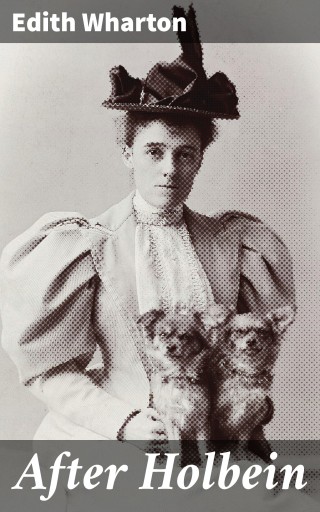
After Holbein
Published by Good Press
Available at 14 bookshops
 Bajalibros Latam
🇺🇸
Visit store →
Bajalibros Latam
🇺🇸
Visit store →
 LORANCHBOOKSTORE
🇺🇸
Visit store →
LORANCHBOOKSTORE
🇺🇸
Visit store →
 Libros Patagonia
🇨🇱
Visit store →
Libros Patagonia
🇨🇱
Visit store →
 Ebooks Librería Carlos Fuentes
🇲🇽
Visit store →
Ebooks Librería Carlos Fuentes
🇲🇽
Visit store →
 Ebooks Librería Antártica
🇨🇱
Visit store →
Ebooks Librería Antártica
🇨🇱
Visit store →
 Ebooks Happy Books
🇨🇴
Visit store →
Ebooks Happy Books
🇨🇴
Visit store →
 ebooks libreria española
🇪🇨
Visit store →
ebooks libreria española
🇪🇨
Visit store →
 Bajalibros Argentina
🇦🇷
Visit store →
Bajalibros Argentina
🇦🇷
Visit store →
 Alpha Books
🇨🇴
Visit store →
Alpha Books
🇨🇴
Visit store →
 Sanborns Ebooks
🇲🇽
Visit store →
Sanborns Ebooks
🇲🇽
Visit store →
 ebooks Libreria del GAM
🇨🇱
Visit store →
ebooks Libreria del GAM
🇨🇱
Visit store →
 Bookshop Uruguay
🇺🇾
Visit store →
Bookshop Uruguay
🇺🇾
Visit store →
 Ebooks Yenny - El Ateneo
🇦🇷
Visit store →
Ebooks Yenny - El Ateneo
🇦🇷
Visit store →
 Crisol Ebooks
🇵🇪
Visit store →
Crisol Ebooks
🇵🇪
Visit store →
About this book
- Language
- English
You might also like
O pai Goriot
Balzac, Honoré de

Doctor Faustus
Mann, Thomas
The Age of Innocence
Wharton, Edith
The Greatest Literary Masterpieces for the Holiday Season
Austen, Jane, Lewis, C. S., Wells, H. G., Melville, Herman, Shakespeare, William, Milton, John, Swift, Jonathan, Defoe, Daniel, Fielding, Henry, Sterne, Laurence, Thackeray, William Makepeace, Shelley, P. B., Shelley, Mary, Keats, John, Brontë, Charlotte, Brontë, Emily, Brontë, Anne, Eliot, George, Dickens, Charles, Hardy, Thomas, Von Arnim, Elizabeth, Lawrence, D. H., Radcliffe, Ann Ward, Stoker, Bram, Doyle, Arthur Conan, Conrad, Joseph, Wilde, Oscar, Carroll, Lewis, Burnett, Frances Hodgson, Grossmith, George Weedon, Collins, Willkie, Chesterton, G. K., Forster, E. M., Eliot, T. S., Joyce, James, Shaw, George Bernard, Yeats, W. B., Scott, Sir Walter, Stevenson, Robert Louis, Grahame, Kenneth, MacDonald, George, Barrie, J. M., Twain, Mark, London, Jack, Hawthorne, Nathaniel, Alcott, Louisa May, Cather, Willa, Wharton, Edith, Chopin, Kate, Thoreau, Henry David, Whitman, Walt, Gibran, Kahlil, Stowe, Harriet Beecher, Douglass, Frederick, Cooper, James Fenimore, James, Henry, Poe, Edgar Allan, Lovecraft, H. P., Wallace, Lewis, Montgomery, L. M., Homer, Plato, Apuleius, Aurelius, Marcus, von Goethe, Johann Wolfgang, Hesse, Herman, Nietzsche, Friedrich, Verne, Jules, Proust, Marcel, Hugo, Victor, Flaubert, Gustave, Leroux, Gastón, de Balzac, Honoré, Stendhal, Voltaire, Baudelaire, Charles, Dumas, Alexandre, Zola, Émile, Ibsen, Henrik, Tolstoy, Leo, Dostoyevsky, Fyodor, Turgenev, Ivan, Chekhov, Anton, Gógol, Nikolai, de Cervantes, Miguel, Galdós, Benito Pérez, de la Barca, Pedro Calderón, Dante, Boccaccio, Giovanni, Machiavelli, Niccolò, Tagore, Rabindranath, Chatterjee, Bankim Chandra, Kâlidasa, Válmíki, Laozi, Tzu, Sun, Confucius, Xueqin, Cao, Der Ling, Princess, Nitobe, Inazo, Okakura, Kakuzo, Natsume, Sōseki, Gilman, Charlotte Perkins, Fitzgerald, F. Scott, Howells, William Dean, Irving, Washington, Baum, L. Frank, Storm, Theodor, Valera, Juan, Kipling, Rudyard
100 Clásicos de la Literatura Universal
Wilde, Oscar, Kafka, Franz, Alighieri, Dante, Twain, Mark, Woolf, Virginia, von Goethe, Johann Wolfgang, Brontë, Emily, Carroll, Lewis, Baum, Lyman Frank, Flaubert, Gustave, Joyce, James, Montgomery, Lucy Maud, Stoker, Bram, de Saint-Exupéry, Antoine, Hardy, Thomas, Collins, Wilkie, Tolstói, Leon, de Cervantes, Miguel, Scott, Walter, Dickinson, Emily, Fitzgerald, Francis Scott, Descartes, René, Kant, Immanuel, Polidori, John William, Chesterton, G. K., Aristóteles, Wharton, Edith, Molière, Shaw, George Bernard, Wollstonecraft, Mary, Arenal, Concepción, Haggard, H. Rider, Verne, Jules, Dickens, Charles, Doyle, Arthur Conan, Kipling, Rudyard, Shelley, Mary, Brontë, Charlotte, Austen, Jane, Zweig, Stefan, Hoffmann, E. T. A., Dumas, Alexandre, Leroux, Gastón, Freud, Sigmund, Nietzsche, Friedrich, James, Henry, Defoe, Daniel, Wells, H. G., Bierce, Ambrose, Burroughs, Edgar Rice, Irving, Washington, Thackeray, William Makepeace, Polo, Marco, Alcott, Louisa May, Verne Julio, Lovecraft, H. P., Homero, Salgari, Emilio, Voltaire, Sófocles, Tzu, Sun, Sienkiewicz, Henryk, de Rojas, Fernando, del Valle-Inclán, Ramón María, Lorca, Federico García, Galdós, Benito Pérez, Marón, Publio Virgilio, Dostoyevsky, Fyodor Mikhailovich
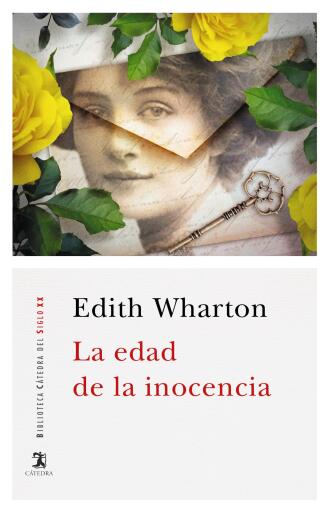
La edad de la inocencia
Wharton, Edith